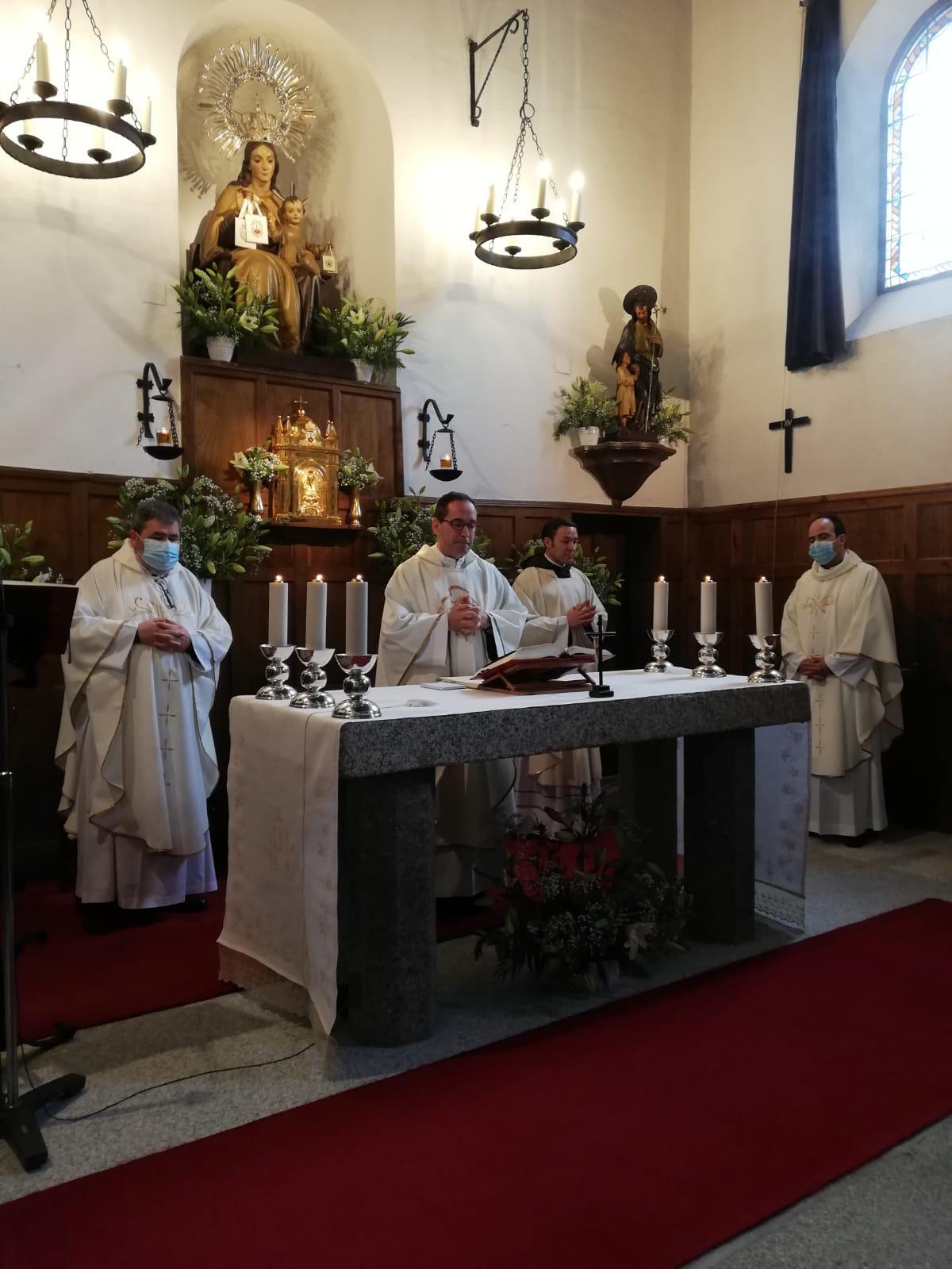
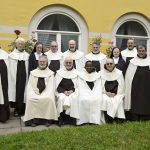
After a long period of discernment, the Discalced Carmelites Nuns of Prague have left the monastery they occupied in the city, to move to a new one in Drasty, a small town located a few kilometres from the capital of the Czech Republic. The final transfer took place on the 1st of March 2020. They themselves explain the reasons and circumstances of the search for a new location, which has taken more than ten years: “The reason for our decision was the growing noise of the square in which the monastery was located, which also had only a very small garden (just 12×15 metres).

We are building our new home on an ex-farm with adjacent land, which was returned to the church in 2017 in a pitiful state. In the first phase, the future guest house was rebuilt, which has now become our temporary monastery. The next phase will be the construction of the monastery with the chapel, which will begin, we hope, at the end of this year and will probably take three to four years. The entire reconstruction process is carried out with the financial help of benefactors, to whom we are very grateful, and with the help of the voluntary work of many people, who are a true community of friends born around the monastery.

The original monastery in Hradčanské náměstí (Prague) will now be managed by our Discalced Carmelite friars.

We ask for your prayers that we allow ourselves to be guided in everything by the Holy Spirit and that both places, the former monastery and the future one, may provide space for a deep encounter with God.

You can find more information about our move on our website: www.karmeldrasty.eu

Information about the original monastery and its current use can be found at: www.fortna.eu”.

On June 16, the Toledan historian and priest, Don José Gómez-Minor, died at the age of 91.

Author of numerous works on the lineage of Saint John of the Cross in Toledo, Gómez-Menor devoted much of his work as a historian to the study of topics related to the Teresian Carmel. In 2011 he published a definitive work on the Saint entitled “Raíces Históricas de San Juan de la Cruz” [“Historical Roots of St John of the Cross”] in which was a prologue by the famous Spanish writer José Jiménez Lozano, also deceased this year.

He collaborated with him in the Professor Santiago Sastre edition, with whom he appears in the photo that accompanies this report.

The Iberian Province in Spain informs us of the 450th Anniversary celebration of the foundation of the friary of Mancera, Salamanca.

On a June 11th Feast of St. Barnabas, friars Juan de la Cruz and Antonio de Jesus of the then community of Duruelo (where the two friars had been novices) left Duruelo at the request of the Provincial Alonso because of the community’s small size and unhealthy condition. Along with friars Juan Baptist and Pedro de los Angeles (who would later profess in Mancera on October 8, 1570), they made a foundation in Mancera. The friars continued in Mancera for 30 years. In 1600, they made a new foundation in Avila that has been recognized since then by the title of first Discalced foundation. Teresa de Jesus attests to this fact in her book, Foundations, chapter 14.

Fr. Provincial Miguel Marquez of the Iberian Province presided over the Eucharistic celebration for the commemoration of the foundation. The Mass was concelebrated with D. Jose Carlos Alejo, (Vicar of the Contemplative Life), D. Fernando, (a young priest, son of Mancera), and Fr. Miguel Angel Gonzalez, OCD (Prior of Alba de Tormes).


We have received good news from the Vicarate of Tanzania: on July 7 and August 6, deacons Peter Carol Chami and Simon Rupoli will be ordained to the priesthood. On July 20, our brothers Hezron Michael Lucas, Cedrich Melkiory, Laurent Joseph, and Datius Prosper will make their first profession in Uyole-Mbeya (novitiate community).

We thank God for these vocations to the Teresian Carmel and for them, we ask for the protection of the Most Holy Virgin and St. Joseph.

The presence of the Order in Tanzania began with the building of a mission supported by all the provinces of India in 1983. Later, on May 8, 1992, the Province of Karnataka-Goa became responsible for the presence of the Teresian Carmel in the region. On March 20, 2002, the Regional Vicarate of Tanzania was created, dependent on that Province.


The Vatican Post Office is returning slowly to normal activity following the unavoidable hiatus caused by the COVID-19 crisis. So, next June 23, new stamp series will debut, among which is expected a stamp of St. Teresa of Jesus of the Andes. The stamp has been scheduled to commemorate the centenary of the death of the Chilean Carmelite saint on this past April 12.

Because of the pandemic, the Holy See also conceded an expansion of the jubilee year motivated by this centenary.

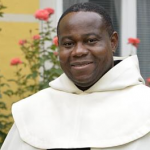
On June 2 during its triennial Chapter, the German Province of the Exaltation of the Holy Cross elected their new Provincial, Fr. Jean-Raoul Kiyangi who was professed in the General Comisariat of the Democratic Republic of the Congo.

Fr. Jean-Raoul was born in 1970 in Lusanga in the Kikwit region. On August 15, 1994, he made his religious profession in the noviciate of Kananga and was ordained to the priesthood in 2002. He arrived in Germany in 2004 to undertake doctoral studies in theology. He finished his studies in 2010 at Wurzburg University with a thesis on juvenile violence. He served as provincial counselor (2011) as well as Provincial Vicar and Prior in Munich (2017).

The past 2nd of June he was elected Provincial in the Chapter that met in Würzburg. Fr. Jean-Raoul became the first non-European Carmelite to lead a European Province of the Order.

Undoubtedly, the Order will remember this fact in the future, a sign of maturity and the fruit of the Carmelite missionary efforts.

Fotos: Fotografie Bayer © Karmelitenkloster Würzburg

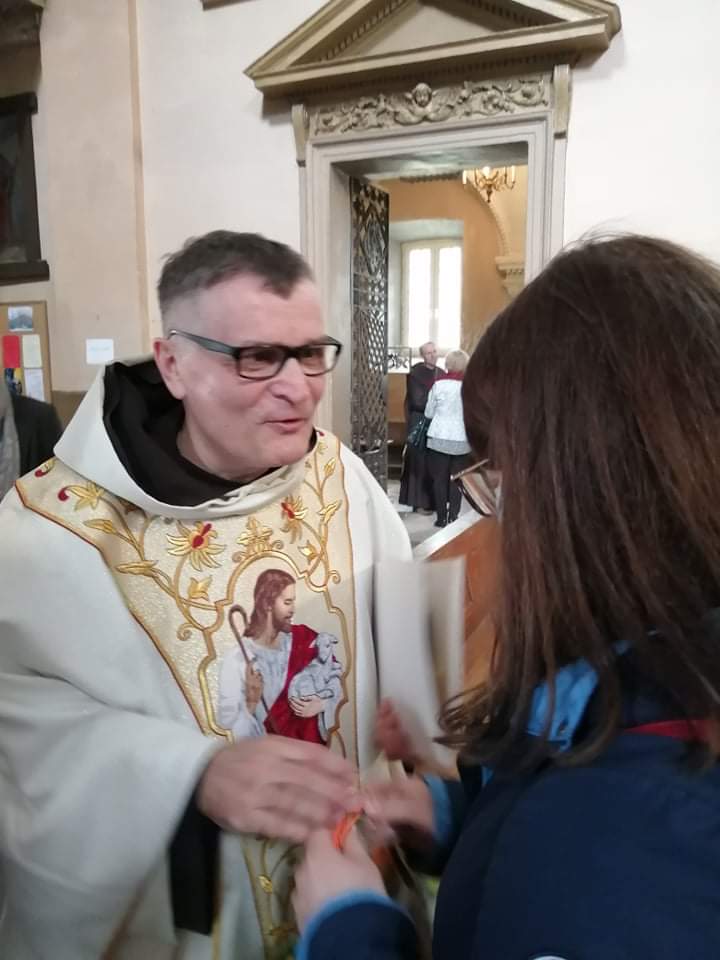
Our brother Jonas Vidas Labanauskas received his priestly ordination on May 30, 2020, from the hands of Bishop Eugenijus Bartulis.

Father Vidas’ Carmelite and theological formation was mostly undertaken in Spain. He has a licentiate in Theology from the Theological Faculty of Northern Spain, Burgos, with a thesis on the presence of the Holy Spirit in the work and doctrine of Saint Teresa of Jesus.

Together with two Polish Discalced Carmelites in the Province of Warsaw, Father Vidas will continue to belong to the Kaunas community in Lithuania, which with work and enthusiasm sets roots for the presence of the male branch of the Teresian Carmel in that Baltic country. Construction of the convent is still underway, and we hope that the brothers will soon be able to move into it.

On June 1, the General Definitory began its quarterly meeting. A hallmark of this meeting is the confinement of the Superior General and Definitors in the General House in Rome since the last meeting in March. Logically, there have been no visits to provinces or travel of any kind, although the Definitory has been able to follow the situation of the circumscriptions using telematic technologies.

During this time, the Definitory will analyze the state of affairs of the numerous provincial chapters that are pending. The hope is that it will be possible to celebrate most of them in June and July. Meanwhile, preparation for the next course will move forward, focusing on the General Chapter which is expected to be held in May 2021. An important milestone that will occur previous to that event is the Extraordinary Definitory in which the new provincial superiors are called to participate. Because the initial plan to celebrate it at the end of August in Mexico is unlikely, a new date will be decided upon in this meeting.

As usual, the Definitory will discuss other specific topics of interest in the present moment and will especially take into consideration the way in which the unexpected and surprising coronavirus pandemic has affected friars, nuns, and seculars, and its consequences in the life of the Order.

The pandemic crisis generated by COVID-19, with the consequent confinement of millions of people on five continents, has also affected the daily service that Discalced Carmelite friars and nuns offer to so many people, in the face of the impossibility of celebrating Mass in convents and monasteries, receiving visitors, performing apostolic services, etc.

However, many of our brothers and sisters have mobilized to continue listening to and accompanying the Christian people and suffering humanity at this painful and particular moment.

The deceased and their families, the sick, health workers, governments and all those who, in some way or other, have been hit by the pandemic, as well as those who have put themselves on the front line of service to society, have been at the centre of our prayer.
In addition, from many convents and monasteries the media, particularly the internet and social networks, have been used to transmit Mass live or hold prayer meetings. Thus, both on Facebook and YouTube, it has been possible to participate, at least virtually, in Eucharistic celebrations in various countries and languages: Italian, Spanish, English, French, Malayalam, etc.

Carmelite communities in many countries have used every means at their disposal to share audios and videos – for example, through WhatsApp – with reflections, readings from the writing of our saints, etc., to encourage and accompany confined people.

CITeS in Avila has scheduled several courses at this time and has also released videos with reflections on the daily gospel. For its part, the Teresianum Theological Faculty has continued its academic work by implementing a class system by videoconference and a personalized follow-up of students through email.

At the General Curia, we try to share on our social networks all the news we have received, as well as the different messages sent by Fr. Saverio Cannistrà during this time. His letter “A Wish in Time of Tribulation” has had a special impact both inside and outside the Order.
All these pastoral actions have been united with charitable efforts reflected in the sharing of goods with the poorest and work to manufacture masks and other useful garments for protection against the disease. We have heard of a certain Carmelite community of nuns that experienced serious deprivation in sharing basic necessities – including food – with needy families who are close to the monastery. Their situation has already been normalized and they prefer to remain anonymous.


COVID-19 has brought the world to a Stop! As we know it has already swallowed over 2,50,000 people and kept billions of people under panic and fear! Over 3 million people affected by the virus still growing!  Here is a small information on what’s happening in India

As of 6th May it has affected around 50,000 people, around 15000 recovered and has witnessed around 1700 deaths, so far. This is quite an insignificant number compared to the Indian population of over 1300 millions. As for today it sounds rather good and seem to be under control. But this virus has become unpredictable in its behavior as in its diffusion. So far it has spread in 35 states of India. Maharashtra, Gujarat; Delhi, Tamilnadu are in the forefront in the number of cases.

India’s Response: On 22 March, India went into a self-imposed isolation — a “Janta Curfew” — when the nation had only seen 390 cases.  Strategic move of a three-week lockdown on 25 March, at just 400 cases has really saved India.  But today it has already reached 50,000 inspite of the continued lock down of the country. From 25 March until today the lock down continues in the country. It has been extended until 17 May: neither trains, buses nor plains function. All religious activities too are banned. Like other parts of the world Easter was celebrated in their homes.

Present Challenges in the total Lock Down: One of the biggest challenges that the country faces are lack of food for poor and middle-class families. In India most of the families depend on daily wages and daily labour. Now that the lock down is so stringent that they can’t go out to work. However, the Government and other Non-Governmental organizations are trying to supply some food and provisions to the families. From the day of lock down many migrant laborers are caught up in their workplaces. They tried in vain to go back to their homes. Hence feeding them, and their situation has become miserable during these past weeks. As of today 14th April, the cases have gone up to 50,000. If there were not to be a lockdown, this number would have been a million. Such could be the growth rate of the virus in India.

The Church and all the charitable organizations are trying to do their best to feed the poor and the hungry. This is the consequence of a total lock down. However, Indians are ready to accept the hunger and be united in fighting the Corona Virus.

Our Brothers and Sisters: As of now I have not heard of any casualties among our friars or sisters in India due to Corona. However, our friars are actively taking initiatives to feed the hungry which is the urgent need of the situation. Wherever we are present we take initiatives to distribute kits containing food; provisions, sanitizers, masks etc. That’s all we can do. Our Nuns all over India are praying day and night unceasingly for the divine intervention.

In recent weeks we have received some news about the pandemic caused by COVID-19. From the Iberian Province of Discalced Carmelites, the sad news arrived of the death of four religious because of the virus. There are reports of friars and nuns being infected and having to go to hospital. We entrust them to our prayers. Some monasteries have had to undergo periods of isolation, which they have completed. The Discalced Carmelite community of friars in Adro, Italy, has passed a quarantine period. Countless are the reports of material help given by our communities of friars and nuns to people in need. So, in Paraguay, our religious have turned to helping the poor through “popular pots”, which allow the poor to enjoy at least a daily amount of nourishment.

We pray for the friars and nuns who have been infected and we appreciate the witness of Christian charity and service to the community offered by our brothers and sisters in various ways, as they are able.

During the first days of May we have done some update work on the website. Therefore we have not been able to upload news to it since early May. Similarly, the next issue of COMMUNICATIONES will include less news than usual.

We apologize and encourage you to follow the current affairs of the Order on the various social networks.

The Information Secretary of the General OCD Curia has been made aware of a great number of initiatives being carried out by the religious of the Order to address the COVID-19 crisis. Also, we have confirmed that some religious provinces and monasteries are directly suffering the consequences of the pandemic and, tragically, we have been notified of some deaths as well as problems caused by the illness. Many people and organizations are aiding our brothers and sisters, including financially, so that they may weather this time. Also, there is no lack of examples of solidarity between the many groups and among their members.

In the face of the pandemic, many communities of sisters around the world are collaborating by making masks or protective clothing for the care givers who work in hospitals and geriatric facilities, as wells as for patients.

Furthermore, friars and monasteries in the Provinces have developed innumerable pastoral initiatives, taking advantage of communications, especially social networks.

In addition, our brothers and sisters have not forgotten the best way to fulfill their mission to serve the Church and humanity: embracing in prayer and the fraternal life the suffering and uncertainty that anguishes everyone, near and far; lending help to all to discover the Light that illuminates the darkness; sharing the hope that restores when we plunge into the mystery of communion with God.


The Father General as well as the Definitors are in Rome in the Generalate, according to the norms established by the Italian government in response to the crisis generated by COVID-19 which affects practically the entire world.

From there, they wish first to send a fraternal greeting to all the communities of brothers and sisters that are suffering during this pandemic, with a special remembrance and deeply felt prayer for the deceased and their families.

Our General Definitor continues working in the service of the Order thanks to the possibilities that the internet offers. During these days, he also held a meeting to review the project of the Norms that were approved in the Extraordinary Definitory of Goa.

Likewise, our brothers in the Curia wish to express their gratitude to the religious who, through a variety of initiatives, accompany the people of God and all humanity that is suffering under the scourge of the pandemic.


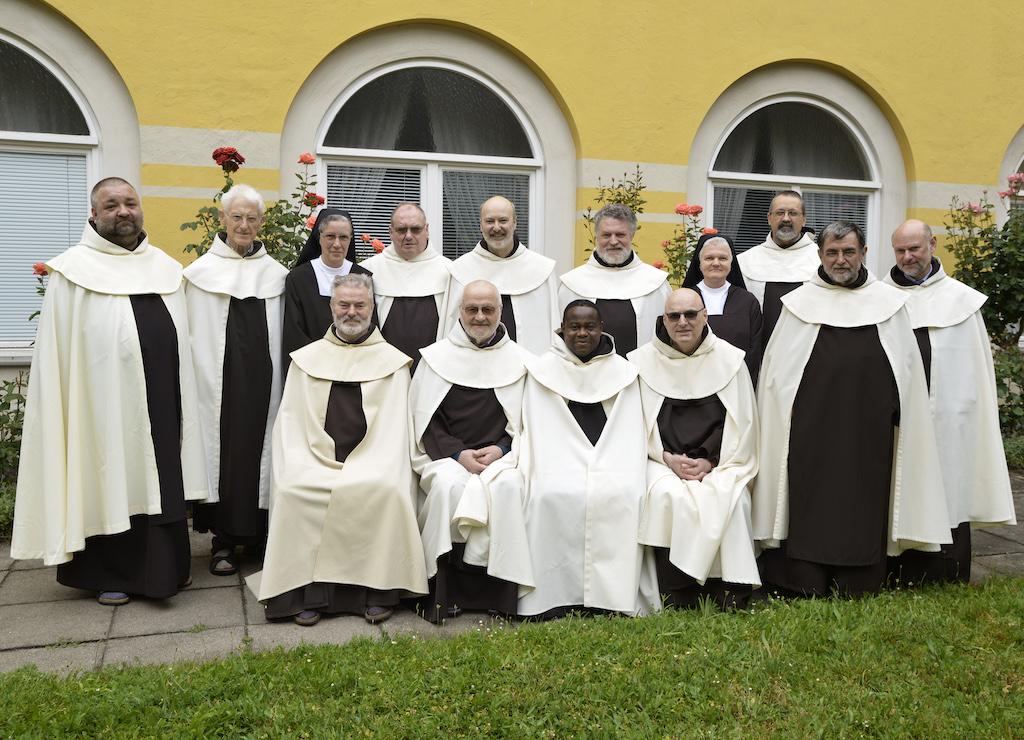
On March 19, the feast of St. Joseph, the young Iraqi lady, SIHAM KHOURANI, received the Carmelite habit in the Carmel of Aleppo. Monsignor Georges Bou Khazen, Latin Bishop of Aleppo, presided at the ceremony, which took place in the monastery chapel.

This is a sign of hope in a society sadly marked by death.

The Carmelite nuns have lived in their monastery all the time of the Syrian war. They have helped the local Church through their prayerful presence and charitable activities, offering support and food not solely to Christians.

During this period, they received with great joy a visit from Fr. General, Saverio Cannistrà.

There are currently eight nuns in the monastery, who always pray for peace in Syria and throughout the world.