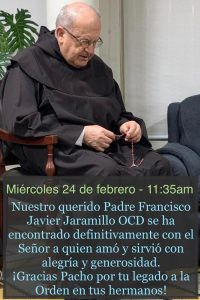
On February 24, Fr. Francisco Javier Jaramillo died in our monastery in Manrique (Medellin, Colombia). He was a member of our Colombian Province of Saint Therese of the Child Jesus. Born on the 5th of December 1939, on the same date of 1957 he made his religious profession. After completing his studies in Colombia and receiving priestly ordination on November 14, 1965, he obtained a degree in Theology from the “Teresianum”.

In his Province he held the positions of student teacher and Provincial (1981-1984), was Director of the magazine “Vida Espiritual” and collaborated with the Latin American Council of Bishops (CELAM) giving special attention to the areas of spirituality and contemplative life.

In the 1985-1991 sexennium, he was a General Definitor and between 1991 and 1994 he served as Rector of the “Teresianum” permanent community.

Returning to his Province, he volunteered to collaborate with the General Delegation of Argentina, where he remained for 15 years. Upon returning to Colombia, he was assigned to the Community of the House of Theology in Bogota. It was there that he was diagnosed with cancer.  So, to facilitate his treatment, he was transferred to our monastery in Manrique, where he died.

As he said goodbye to the communities of Rome, where he had served the Center of Order for twelve years, he wrote a touching farewell letter in which he left a record of his gratitude to God for all the compassion received, even in the midst of difficult experiences and bad times.

We recall here a brief excerpt from his precious missive: “The only thing for me to do now is to place myself, once again, into the Lord’s hands, to start giving what God has gifted me to give. Always, what has been best in my life is what HE has done … Today, more than ever, I would like to be an Epiphany of God for so many who want to know and love him and for so many who have not yet discovered him in their lives or in their history … Maybe, in all this, I’m saying I want to do his will.”

May our dear brother, Fr. “Pacho” Jaramillo, rest in peace.

Does spirituality need the Church? Ideas, difficulties, and hopes (62nd Spirituality Week, March 14-18, 2021, 16:00 – 18:00)

After a year on pause caused by the Coronavirus pandemic, the Spirituality Week at the Teresium is coming back. This classic initiative is offered for the first time this year in digital format on the Zoom platform.

One hundred years after the audacious prophesy of Romano Guardini (he began a process of incalculable significance), this optimism seems to awaken a certain discomfort. In the face of diverse problems in the Church, as well as in other traditional religious communities, questions arise regarding the nature of the desired phenomenon of spirituality in souls. What remains of this ideal? Some people prefer to talk of an awakening of spirituality in modern culture as, effectively, an alternative to life in the Church. Does spirituality need the Church? We invite you to listen to these reflections with us!

Registration (required and free): http://www.teresianum.net/es/62-settimana-di-spiritualita/

Fr. Patrizio Sciadini, ocd, who was a missionary for many years in Brazil and until recently  General Delegate in Egypt, has published a book of great interest in this year dedicated to St Joseph. The title is: ” Caminhando con São José ” [Walking with St Joseph].

As the author  says, his work, first of all, wants to emphasize the depth of the title given to St. Joseph in the gospel: “the just man”. For Fr. Patrizio, “just” is equivalent to “upright ” and “holy” and his holiness unfolds in the mission for which he was chosen: to be a father figure in the family of Nazareth, to protect Mary and Jesus. Joseph, Fr. Sciadini says, is a man who keeps quiet, but precisely for this reason he has an innate capacity to hear and obey the voice of the Lord.

Vatican Radio and Vatican News in Portuguese mention this publication:

https://www.vaticannews.va/pt/igreja/news/2021-01/frei-patricio-caminhando-com-sao-jose.html

Fifty years have passed since the arrival of the Discalced Carmelite friars in Burundi, a presence that presently depends on the Krakow Province.

To celebrate such an important date, in the framework of being a feast of a young Carmel, the religious present in Burundi organized a liturgical ceremony and a series of performances given by the youth of our parishes and Carmelite groups. The event, presided over by Msgr. Simón NTAMWANA, was attended by the Governor of the province and various artists who wanted to join the celebration in order to encourage the young people who carry out different cultural activities in the parish groups: music, folklore, painting, etc.

Also present was the mission delegate, Fr A.M. IGIRUKWAYO, ocd, accompanied by the parish priest, Fr. P. Porwit, ocd, who drew attention to the wealth and potential of Burundian youth, which gives hope for a prosperous and peaceful future for the country.

Msgr. NTAMWANA, for his part, thanked the Carmelites for their work and stressed the need to put young people at the centre of pastoral action, helping them as they come to maturity and opening them to new experiences that facilitate their entry into society, combining tradition and novelty in an increasingly connected and changing world.

Link PowerPoint ⬇️


On January 30, 1948, Hindu radicals murdered Mahatma K. Gandhi in New Delhi. In homage to the Mahatma, a day of peace is celebrated all over the world on that date.

Our brothers in the Central African Republic have not left this opportunity pass by, during a very difficult situation for the country, and organized a day of prayer for their nation. It was joined by Muslims, Protestants and Catholics of Baoro.

It was an exceptional time of prayer, singing and joy, which brought together more than 2,000 people, representatives of a peace-loving population and, with God’s help, more numerous, strong and full of hope than those who desire war.

We join their prayer and intentions.

The church of the Discalced Carmelites of the Iberian Province on Avenida Diagonal de Barcelona, which is also a Sanctuary of Our Lady of Mt Carmel, is celebrating one hundred years of existence (1921-2021).

After the abolition of monasteries in the mid-19th century, a first group of Carmelite friars arrived in Barcelona in 1896. With the creation of the Province of Catalonia in 1906, erecting a monastery was immediately thought of, the foundation stone being laid on March 25, 1909, with the work being completed the following year. Later, in 1913, the foundation stone was laid of the church, which was opened on January 13, 1921 with an act of worship attended by civil, military and ecclesiastical authorities.

The builders sought inspiration for his work from very different sources (Romanesque, Byzantine, Islamic or modernist arts), which resulted in quite an eclectic construction. The church is basilical in style, with three naves. The transept is crowned by a large dome. The mosaics, which cover many parts of the interior, especially the main altar, are of high quality and evoke the Byzantine and modernist inspiration of the artists who designed them.

A virtual visit to the church can be made using this link:

https://roundme.com/tour/228851/view/648703/

We received news from the Superior of the Discalced Carmelite mission in Sri Lanka, Fr. S. Arockiasamy, OCD, in which he informed us of the blessing and opening of the first friars’ monastery in that country. Cardinal Malcolm Ranjith presided at the ceremony.

Although the event had been prepared for March 2020 and Fr. Saverio Cannistrà, our General, had intended to be present, it had to be suspended because of the pandemic. Thank God, on January 16, 2021, the event was held, although only the local authorities and the closest faithful were present with our brethren.

We thank our brothers for the stable implementation of this desired mission, which has been accompanied with attention by the General Curia, either through communication with Fr. General, or through personal visits by the Definitor in charge of the area, Fr. Johannes Gorantla.

We also join in their joy and pray for success in their apostolate in this new presence of St Teresa’s Carmel.


Brother Abel of Jesus, a Discalced Carmelite student from the Iberian Province, won the third celebration of the Young Theological Essay Award, organized by the prestigious Spanish Catholic publishing house PPC (Christian Popular Promotion).

At the age of 27, Brother Abel, who gained a Master of Dogmatic-Fundamental Theology degree at the Comillas Pontifical University in Madrid, won the award ─the entire jury unanimous─ with his work on spirituality in the digital age. According to sources in the publishing house, the essay will be published in March this year.

A Discalced Carmelite since 2016, Br. Abel tries to make his work recognisably believing, inspired by the Gospel and by the doctrine of Carmelite saints, in the stormy sea of social networks. He has a YouTube channel that, at the moment, has 5,330 subscribers and he has already published more than 60 videos on spirituality and networks, but also on other topics, such as the spiritual values of the current cinema or youth literature:

Fray Abel is also present on other networks, such as Twitter and Facebook.

Br Abel, we send our congratulations and encouragement for your work.


With great joy, we are sending the news which has reached us of our brothers and sisters in this Asian country.

Despite the difficulties imposed due to the pandemic and keeping the security measures indicated by the authorities, the communities of friars, nuns and seculars in Malaysia celebrated a three-fold festival on the ocasión of the Feast day of St. John of the Cross, 14th December, just gone.

In addition to the Saint’s Feast day, the 90th anniversary of the foundation of the Convent of Our Lady of Mount Carmel and St. Thérèse of the Child Jesus (1930-2020) was celebrated and the 60th anniversary of the presence of missionaries with Mother Consuelo de Jesús, who left Spain at the age of 32 to go to the  Convent in Kota Kinabalu (then Jesselton) on 12th  April, 1960. She was superior of the community for more than 30 years and at the age of 93 still enjoys very good health.

The ceremony was presided over by the Archbishop, Mons. John Wong, accompanied by the community chaplain, Fr Mattheus Luta, Fr. Cosme Lee, Fr David Sham and 30 members of the Carmelite family. Mons. Wong addressed some touching words to Mother Consuelo, whose vocation he interpreted in the light of the Prophet Isaiah, encouraging her to continue with her sisters, on the luminous dark journey suggested by St. John of the Cross so as to be, like him, witnesses to the love of God, through the redemptive incarnation in Christ, always at the service of the local and universal Church. He ended his exhortation thanking the presence and gift of the Carmelite sisters, who have seven sisters in formation at the present time.

After celebration of Mass, the president of the OCDS, sister Celestine Jinu, invited everyone to a fraternal agape outside the Chapel. The birthday cake in honour of the occasion was distributed by Mons. Wong, on behalf of the Carmelite community, which had made it.

This news was reported in the local media as can be seen:

http://www.heraldmalaysia.com/news/the-carmelite-community-celebrates-triple-joys-on-feast-of-st-john-of-the-cross/57099/1

Our gratitude to Mrs. Catherine Wan and her newspaper for the news and the accompanying photo.


At the time that the Apostolic Letter, Patris Corde, was published on the occasion of the 150th anniversary of the proclamation of St. Joseph as Patron of the Universal Church, Pope Francis announced the start of a year dedicated to St. Joseph, with the intention that, in these difficult times for mankind, we might know how to turn our attention to “ordinary” people who, though far from the limelight, exercise patience and offer hope every day. In this, they resemble Saint Joseph, “the man who goes unnoticed, a daily, discreet and hidden presence,” who nonetheless played “an incomparable role in the history of salvation”.

Joseph, who loved Jesus with a father’s love, is the tender, obedient and accepting servant; a courageous and hard-working father, who, in the shadows, works without seeking the limelight.

For the Teresian Carmel, the year dedicated to St. Joseph is one of special joy, which gives us the opportunity to deepen this dimension of our charisma, just as St. Teresa of Jesus and other prominent figures in the Order, such as Fr. Jerónimo Gracián of the Mother of God, affirmed.

In fact, the same day that the Holy Father’s Apostolic Letter was published, the Superiors of the Carmelite and Discalced Carmelite Orders published a joint letter to the Carmelite Orders entitled: St. Joseph, Patron of Carmel, A Letter from the Prior General, O.Carm. and Superior General, O.C.D. to the Carmelite Family on the occasion of the 150th anniversary of the proclamation of St. Joseph as Patron of the Universal Church.


On 25th December, Fr. Reginald Thomas Foster, Discalced Carmelite of the Province of Washington, died in St. Anne’s hospital in Milwaukee. He had been moved there eight days previously after testing positive for coronavirus and in addition to the care received in the hospital, his progress was monitored daily by Dr. Azcueta, the doctor in charge of health in the Province, since  visits from religious were forbidden as he was in a ward designated for ‘COVID’.

There were no signs of pulmonary complications and he only had pharyngitis, together with a slight cough, so that it was hoped that he would overcome the illness. However, on Christmas Eve, he quickly took a grave turn for the worse, dying shortly after at precisely 12:34 AM.

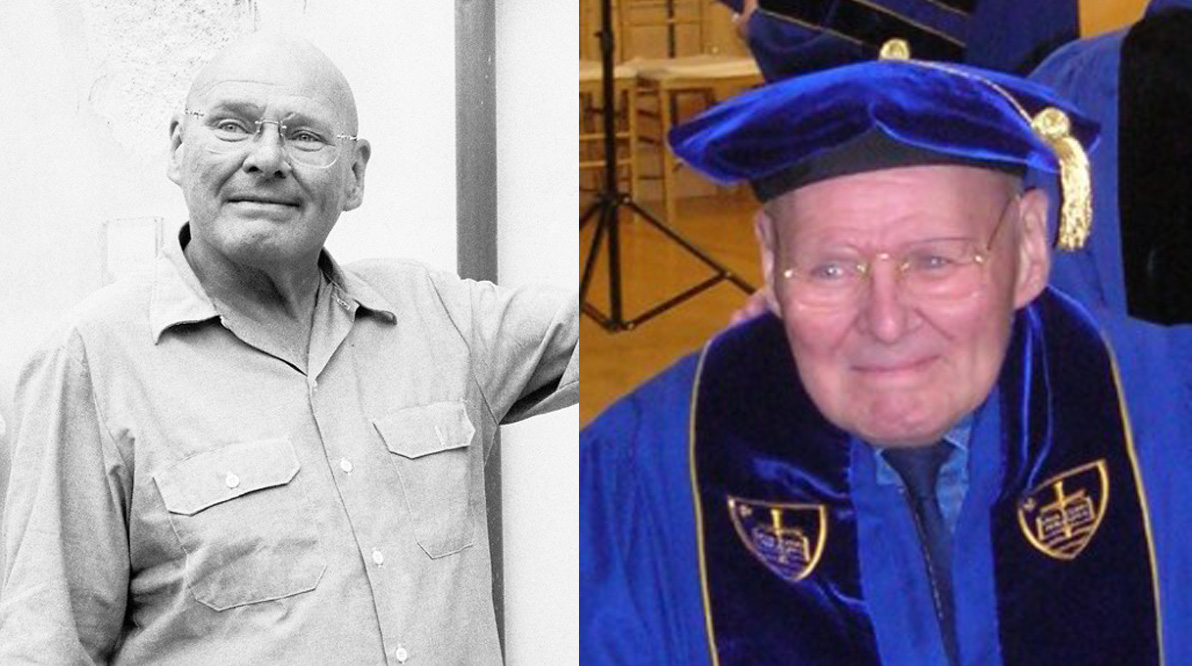
Fr. Reginald, famous as a world expert in Latin language and literature, was born in Milwaukee on 14th November 1939, into a modest family of plumbers, of whom he was always very proud. From 1970 until his retirement in 2009, he worked in the Secretariat of the Vatican State, collaborating on texts and documents specifically in Latin. For 30 years, he was a professor at the Gregorian University and, furthermore, gave innumerable Latin courses and seminars in which he imparted his knowledge of the language and his revolutionary pedagogy, always tailored to the students, earning him their sincere affection. During his stay in Rome, he organised a programme for the study of the Latin language and knowledge of the city called Aestiva Romae Latinitas, totally free.

His classes were always very well attended and he continued to teach almost until his death.

In collaboration with Daniel Patricius McCarthy, he published a Latin teaching manual in 2016 (The Catholic University of America Press): Ossa Latinitatis Sola Ad Mentem Reginaldi Rationuemque (The Mere Bones of Latin According to the Thought and System of Reginald). It demonstrated his method of teaching, which not only sought to teach reading authentic Latin texts, but also to help the student write and speak the language.

In 2010, he received an honorary doctorate from the University of Notre Dame, in Indiana.

May Fr. Reginaldo Thomas Foster, OCD, rest in the peace of the Lord.


1994 Latin Fanatic

DOC001 (59)

Publication of La Obra Máxima began in January 1921 thanks to the missionary zeal of Ven. Fr. Juan Vicente Zengotita (1862-1943) who, after 17 fruitful years of pastoral duties in India, on his return to Spain, with Carmelite, missionary sensitivity, wanted to launch a publication which continues to be a point of reference in its field, not only for the Teresian Order of Carmel but also in the wider field of missions.

La Obra Máxima (LOM) is a monthly publication bringing together news not only from some of the missionary ventures in the Order but seeks also to be a voice for small, Christian communities present in the most distant corners of the world, many of whom are suffering persecution or discrimination on account of their faith.

Always in keeping with the missionary intentions of the Pope, the missionary publication La Obra Máxima wants to continue with its work of making readers lovingly aware of the Carmelite missions and of the missions in the Church at large.

Thanks to this labour of sensitization throughout its history,  LOM has been able to respond to many requests from different types of missionary endeavours within the Order.

It is the task of the whole of the Teresian Carmel to cherish these means of publication so that the missionary flame of our Order remains alight and so that people in need can find through our presence, God’s consolation and fraternal help.


LOM also has an internet presence: https://www.laobramaxima.es/www/portada.php as well as in social media.


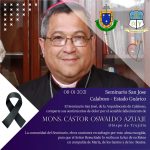
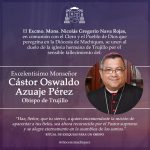
Bishop Azuaje was born in Maracaibo on 19 October 1951 in a family of six brothers. He first learned about the Discalced Carmelite order in 1966 through the nuns at Mérida, in the Venezuelan Andes.

Discerning his vocation to the Teresian Carmel, Oswaldo Azuaje entered the novitiate program of the Province of Aragonia-Valenza, Spain at the Desert of las Palmas, in Castile. He professed his first vows as a Discalced Carmelite friar on 12 October 1968.

Three years of philosophy studies followed in Zaragoza, and then Ajuaje pursued his theology studies with the Discalced Carmelites, completing first-year theology (1971–1972) at the historic Stella Maris seminary at Haifa, Israel and another three years (1972–1975) at the Teresianum in Rome.

On 31 August 1974 Oswaldo Azuaje pronounced his solemn vows; he was ordained to the priesthood at the age of 24 on Christmas Day, 25 December 1975 in Mérida, the city that was the cradle of his Carmelite vocation.

Azuaje returned to Rome to complete his theological studies. He earned a doctorate in Moral Theology summa cum laude from the Alfonsianum Academy in Rome in 1978. Nearly 20 years later, he would return to academic study and earn a diploma in spiritual theology in 1994 following a year of study at the Universidad de la Mística, CITeS in Avila, Spain.

As is the case with every Discalced Carmelite prelate, many years of rich and fruitful ministry followed, first in Costa Rica:

  • Formator-assistant to the Master of Novices and Master of Simple Professed (1978 and 1984), where he was the formator for another future Discalced Carmelite bishop, Silvio José Báez, O.C.D.
  • Professor at the Interdiocesan Seminary of Paso Ancho, San José, and at the Intercongregational Theological Institute of Central America ITAC (1978 and 1984).
  • Secretary of the Conference of Religious (CONCOR).
  • Director of the Senderos Theological Journal

Azuaje then returned to Venezuela to serve with the Discalced Carmelite friars:

  • Appointed formator of postulants and simple professed in 1984 at Barquisimeto
  • Professor at the Divina Pastora Seminary.
  • President of the Venezuelan Conference of Men and Women Religious CONVER Section and Provincial Delegate of the Discalced Carmelites of Venezuela from 1987 to 1990.
  • Provincial delegate and formator of the Discalced Carmelites in Caracas (1990 and 1993).
  • Member of the Board of Directors of the Joint Secretariat of Men and Women Religious SECORVE in Caracas.
  • Professor for one year at the Institute of Theology for Religious ITER in Caracas.
  • Superior of the Discalced Carmelite Community in Mérida in 1993.
  • General Delegate of the Discalced Carmelites of Venezuela (1996 to July 1999).
  • Appointed Master of Novices in 1996.
  • Professor at San Buenaventura Seminary in Mérida in 1993.
  • Spiritual Director at the seminary from 1999.
  • President of the Regional CONVER-Mérida from 1999 to 2003.
  • Episcopal Vicar of Consecrated Life of the Archdiocese of Mérida, appointed by Monsignor Baltasar Porras in 1998.
  • Member of the Latin American Combined Commission of the Carmelite Orders from 1994 to 2003.
  • Superior and formator in the Carmelite formation house at Barquisimeto.
  • Between 2002 and 2003 he was part of the commission that participated in the writing of the document on Religious Life in the Venezuelan Plenary Council.
  • That same year 2002 he became president of the Regional Delegation of CONVER- Barquisimeto; this commitment would last three years.
  • In 2005, he was named General Delegate of the Discalced Carmelites of Venezuela.

It was on 30 June 2007 that the Vatican Press Office published in the Osservatore Romano and announced on Radio Vaticana the nomination of Cástor Oswaldo Azuaje Pérez, O.C.D. as Auxiliary Bishop of Maracaibo, Venezuela and Titular Bishop of Vertara.

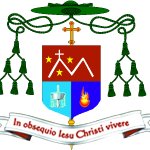
On his Episcopal coat of arms appears our familiar Carmelite symbol of the three stars with the motto from the Carmelite Rule: “To live a life of allegiance to Jesus Christ.”

Bishop Azuaje was ordained 31 August 2007 in the Church of San Tarcisio in Maracaibo. The principal consecrator was Ubaldo Ramón Santana Sequera, F.M.I., the Archbishop of Maracaibo. The principal co-consecrators were Baltazar Enrique Porras Cardozo, the Archbishop of Mérida and Archbishop Giacinto Berloco, the Apostolic Nuncio to Venezuela.

On Holy Tuesday 3 April 2012, Pope Benedict XVI appointed Bishop Azuaje to serve as bishop of the diocese of Trujillo, Venezuela. He took possession of this diocesan see on 9 June 2012.

In the Venezuelan Episcopal Conference, Bishop Azuaje assumed various responsibilities. He was President of the Commission on Youth and University Ministry for two triennia. From January 2015 to January 2018 he was President of the Commission on Consecrated Life. He currently served as a member of the Liturgy Commission of the Venezuelan Episcopal Conference.

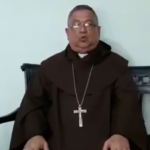
Bishop Azuaje was unafraid to exercise his prophetic ministry as a Carmelite bishop, defending the rights of downtrodden Venezuelan citizens. In 2019 he deplored the power blackout ordered by the government of dictator Nicolás Maduro, telling the Catholic NGO Aid to the Church in Need about the solidarity of the people at that moment. They were “looking for the Lord in every brother who needs us. The days of the blackout were an opportunity to witness great examples of solidarity… in the sharing of food and drinking water, gasoline for the vehicles and many other examples of people sharing their sufferings and joys together.”

As he embarked on his episcopal ministry in 2007, he confided to our friars at the Discalced Carmelite General Curia:

“To leave the Order which has been my home — where I have lived and breathed — it isn’t easy. It’s hard for a sinner like myself, who has lived in the Carmelite Order as my “maternal home”, to leave the Teresian Carmel where I’ve received everything”.

From: “CarmeliteQuotes” (https://carmelitequotes.blog/)

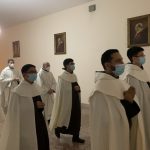
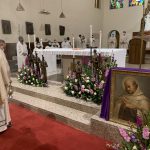
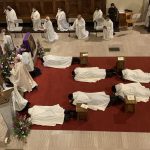
As has been customary in recent years, December the 14th, feast of St. John of the Cross, was a special day for the three communities of the Teresianum: Br. Mari Domingo Savio of Korea, Br. John of the conversion of St Paul from Vietnam, Br. Justin Maria of Jesus Crucified from the Philippines, Br. Jean Pierre of Divine Mercy of Madagascar, Br. Leo of St. John of the Cross and Br. Jigneshkumar of St. Teresa of the Child Jesus from India, all members of the International College of St. John of the Cross in Rome, made their solemn profession into the hands of Fr. General, Saverio Cannistrà. By using the precautionary mean demanded by COVOD-19, members of the International College, the Missionary Seminary and the permanent Community of the Teresianum in Rome were able to take part in the celebration.

Our brothers and sisters around the world (nuns, friars, and Secular Order members) are contributing in many ways to bring comfort and hope to people suffering from the pandemic provoked by the coronavirus.

Among these contributions, it is worth emphasizing the community or individual work on the internet carried out by many members of our Order, by using these means to share liturgical spaces, formation and prayer, dialogue and encounter, reading of the works of our saints, etc.

There are many initiatives now present on the net carrying the stamp of the Teresian Carmel, from India to Spain, from Britain to Burundi, from the United States to Argentina or Australia. As far as possible, on the social networks of the Curia General, we try to share the initiatives that we find or from which we receive news.

The centres under the General Government are also becoming present on the net. Thus, CITeS ─the University of Mysticism─ is promoting a large number of activities of a formative, liturgical or spiritual nature, which can be accessed by consulting its website (www.mistica.es) or through its YouTube channel (Universidad de la Mística). For its part, the Teresianum offered online the XVIII Symposium on Mysticism and, from December13, you can consult on its YouTube channel the conferences from the monthly retreats (Teresianum Pontifical Theological Faculty – Rome).

We encourage you to get to know these initiatives and make them known to others.