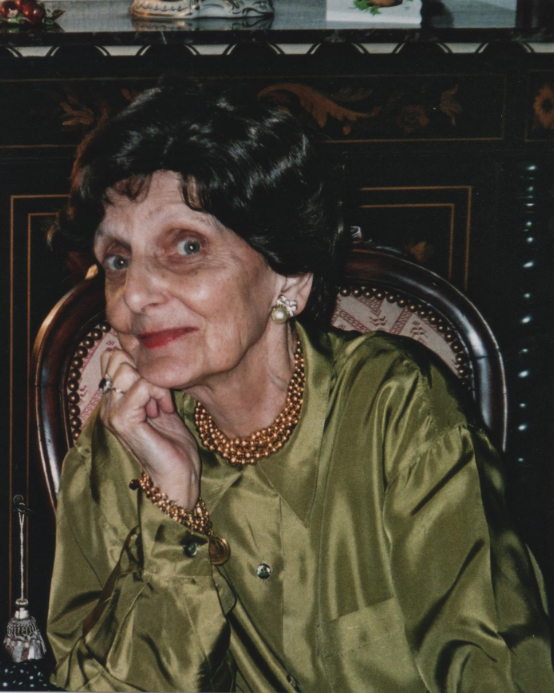
From the community of Alba de Tormes, in the Iberian province (Spain), we received the sad news of the death of Jeannine Poitrey on December 31st last, in Biarritz (France).

Mrs. Poitrey, a Parisian by birth, devoted much of her intellectual life to the literary and linguistic study of the work of Saint Teresa of Jesus, as well as to the diffusion of her spirituality.

A great specialist in the Spanish language of the 16th century, she published important studies on the vocabulary of the Saint in her works (particularly notable is her work on the texts of the Life and Way of Perfection, published by the University of Lille in 1976 and translated into Spanish by the Pontifical University of Salamanca in 1983).

She published also an introduction to reading the Saint as well as various translations of Teresian manuscripts. She was a professor at the Sorbonne and taught at various universities and faculties, such as San Vicente Ferrer in Valencia, Spain.

She was the recipient of the Great Cross of Alfonso X the Wise, which was personally bestowed on her by the then King of Spain, Juan Carlos I. May she rest in peace.

God bless! Three new Ordinandi at Kenya’s mission! (Fr. Peter-Canisius Otieno, Fr. Harrison Waiganjo, and Fr. Isaac Namanda).

They were ordained on February 16th at Tangaza University College (which is just about five minutes walk away from our St. John of the Cross monastery in Nairobi.)

They were ordained by Bishop George Tambala, OCD of Malawi. (Bishop George himself is a former student of Tangaza and of the monastery in Nairobi).

Our brother, Fr. Patrizio Sciadini, or Abuna Patrick, as he is known in the Country of the Nile, has been re-elected for a second term as President of the religious in Egypt, who were gathered in an elective assembly at the end of last March.

Also elected were the Vice-President (Abuna Kamal, Franciscan) and the Secretary (Abuna Rubens, of the African missions). We wish our brother and all the religious of Egypt the blessing of God and peace, so necessary to be able to continue carrying out their mission in those lands.

On March 31st, during his apostolic journey to Morocco, Pope Francis met at the Cathedral of Rabat with priests, religious, consecrated and the Ecumenical Council of the Churches.

Our Discalced Carmelite Sisters from the Tangier monastery were able to participate, with great joy, in this encounter with the successor of Peter, feeling accompanied and loved by the Holy Father and confirmed in the faith by him and his generous commitment in this Muslim African country.

They were able to hear how Francis recalled that a small Christian community, like that of Morocco, is not insignificant. The Pope also called for collaboration, dialogue and charity between the various Christian confessions and with Islam.

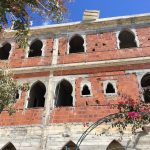
On the other hand, as can be seen in the photos, our sisters are carrying out important restoration works on the monastery, costly but absolutely necessary.

The “OUR LADY OF MY CARMEL” Association of Discalced Carmelite nuns in Peru, recently carried out a course on Vultum Dei Querere and Cor Orans, recent  documents from the Holy See. It was presented in 3 locations: North, South and Centre, and on different dates, with great participation of the sisters. The course was given by the following Discalced Carmelites: Fr Pedro Zubieta, who prepared the work sheets, Fr. Alfredo Amesti, Commissar, and Fr Ángel Zapata, the Association’s consultor.

The course was presented from the 14th to the 16th of January in the North zone, from the 20th to the 23rd in the South zone and from the 28th to the 30th of the same month in the Central zone.

From the 28th of January to the 1st of February, at the University of mysticism, the Discalced Carmelite Order in Europe organized a meeting of the religious who, in the Discalced Carmel, are involved in the process of formation. There are 14 provinces of friars who take part in this annual formation meeting. These provinces are distributed in 9 countries: Belgium, Croatia, Spain, France, Italy, Malta, Poland, Portugal, and Lebanon which is linked to the European provinces. Thirty-two formators gathered to discuss the theme “Community: a place of encounter and communion”. The speakers at the conference numbered three: Father Gonzalo Fernandez, Vicar General of the Claretians Missionaries, who addressed the topic “The Challenges of community life. Solutions from the culture and psychology of today’s youth “; Juan Antonio Marcos, a Carmelite, spoke about “Educating freedom in the spiritual path according to the Saints of Carmel”, and finally the Jesuit, Luis María García Domínguez, developed the topic: “How to accompany: techniques of dialogue between formators and those being formed”. The participants in this meeting spent the afternoons of the 29th and the 31st visiting places in the city of Avila associated with Teresa. A visit to Duruelo, the site of the first male foundation by Teresa, was held on the morning of the 30th.

As we have reported in detail through our social networks, this year 2019 marks 400 years since the arrival of the first Discalced Carmelite missionaries to the region of Goa, India.

At the same time and place, the Extraordinary Definitory was celebrated, allowing the Major Superiors of all the circumscriptions of the Order, led by Fr. General and his Definitors, to be able to participate in the initial celebrations of this jubilee.

We thank God for the gift of the Teresian Carmelite Order to India and we hope that this occasion will be a source of blessings for all our brothers and sisters present in that country and all the missions undertaken by the various provinces of India.

From our well-loved Fr. Federico Trinchero, a Discalced Carmelite friar, we have received news from the Central African Republic, in particular about Carmel in Bangui, the Capital. After the terrible massacre carried out in November in Alindao, about 500 kilometres from the capital, by an Islamist group (paradoxically called the “Union for Peace in the RCA”) during which more than eighty people died, the city was totally looted and the Church desecrated, the Catholics of the country were left in a strong state of shock. Among the victims were two priests and through the courageous intervention of the young bishop of the diocese, Bishop D. Cyr-Néstor Yapaupa, the lives of hundreds of people were saved as he organized their escape into the savannah, he himself remaining behind.

The initial moments of pain and bewilderment having past, the dioceses of Central Africa proposed that December 1st, the National holiday, be dedicated to prayer for peace and reconciliation.

But it’s not all bad news. Despite the difficulties faced by three-quarters of the country, our missions are still working at full capacity, although a “normal” day would be quite an event for everyone. In addition, on 8th of December, was celebrated the solemn profession of brother Michael, a Discalced Carmelite. He is the eighth of twelve brothers, whose blind father did not miss the ceremony. With his definitive incorporation into the Order, for the first time the number of native religious surpasses that of the Italian missionaries.

Grateful that we can transmit some good news, we also indicate some means by which we can help our brothers financially:

1) by bank transfer to Missioni CARMELITANE LIGURI using IBAN: IT42D0503431830000000010043;

2) by payment through the Postal current account N. 43276344 in favour of AMICIZIA Missionaria ONLUS.

3) SWIFT Code for a transfer from abroad is BAPPIT2150

More information on the website: www. Amiciziamissionaria. It/Donazioni. aspx

Born in La Paz, Bolivia, on September 20th, 1936, he made his profession in the Discalced Carmel and received the name Gonzalo de Jesús María on February 10th, 1957. He was ordained to the priesthood on October 21st, 1963, and on January 7th, 1985, he was consecrated bishop. From 2000, he held the office of Military Bishop of Bolivia. He was currently the Military Bishop Emeritus and resided in a community of Discalced Carmelites – Our Lady of Mount Carmel parish – in La Paz. He had been ill for several months, and on January 14th slipped into a coma and died a few hours later.

Bishop Gonzalo was outstanding for his closeness to the armed forces, migrants, and refugees. His death caused great lament in the Bolivian see as well as among civil and military authorities that have expressed their condolences to the Bolivian Carmel.

His funeral was celebrated on January 16th, Cardinal Toribio P. Ticona presiding, and numerous bishops concelebrated. The Provincial of Iberia, Father Miguel Márquez, OCD, sent a message of condolence, and the Regional Vicar, Father Carlos Medina, OCD, offered a recollection of the human and spiritual figure of Bishop Gonzalo. May he rest in peace.

A video of the funeral ceremony:

https://www.youtube.com/watch?time_continue=217&v=OYYvz_H3xaE

At the end of December, the traditional meeting of Bishops and Patriarchs took place in Cairo, Egypt. Several topics concerning the situation of Christians in that country were discussed. They also, as do our brothers in the faith, sometimes suffer the persecution that currently hammers the Middle East. The Delegate General of the Discalced Carmelites for Egypt, Father Patrizio Sciadini, attended as president of the confederation of religious residing in that country. Let us pray for our brothers and sisters who continue proclaiming the Gospel in those lands.

The last day of work. On Saturday evening, the draft of the final document from the Goa Extraordinary Definitory was distributed to the members of the Definitory. The first morning session on Sunday took place in the geographic-linguistic groups, who examined and discussed the proposed text, proposing possible additions or modifications. The result of the shared analysis was delivered by the secretaries of each group to the moderators, who integrated into the draft the observations made.

Meanwhile, at the Old Goa Cathedral, Fr. General presided at the opening session of a Seminar on the history and contribution of the Discalced Carmelites in India, during which, conferences will be given of a historical, artistic-architectural and spiritual nature, giving a look at the challenges in India today.

In the last official session held in the Great Hall, the definitive text of the message was presented and approved unanimously.

After final speeches of summary, thanks and farewell by Fr Johannes Gorantla and the General, the 2019 Extraordinary General Definitory was declared concluded with the singing of the “Flos Carmeli”.

At 4:00 p.m., in the Old Goa Cathedral, took place the commemorative celebration of the IV Centenary of the arrival of Carmel in India. Presiding at the Eucharist was Mons. Felipe Neri, Archbishop of Goa, and concelebrating with him were Mons. Derek Fernandes (Bishop ofKarwar), Mons. Luis Pablo D’Souza (emeritus Bishop ofMangalore), as well as, naturally, our General, Fr Saverio Cannistrà, the General Definitors, the members of the Extraordinary Definitory, and also a considerable numbers of priests. Also attending the ceremony were Discalced Carmelite students who had come from all over India for this extraordinary occasion. Besides the 220 concelebrants, filling the enormous baroque cathedral was a multitude of faithful, Secular Carmelites, religious from the various Carmelite congregations born in India (the most numerous has more than 6,000 Sisters).

After the Mass, under an immense marquee prepared for the occasion, the official celebration of the fourth centenary unfolded, during which were choir performances by the almost 60 students from Karnataka-Goa, the panegyrics, the official speeches of Prelates, as well as typical music and dances.

Now we go back to the daily rhythm of life, work and mission, with the pride of being the bearers of a valuable gift and with the humility of those who know that “all is a grace”.

On the morning of the 9th of February, the work of the Extraordinary Definitory continued with regional meetings and meetings of the various Conferences of Superiors, while the Commission entrusted with the preparing a draft of the final Document of the Definitory continued their work.

At 5:30 in the evening, a statue of Our Lady of Mt Carmel was blessed. It will be placed in the “St. Joseph Vaz” Spirituality Centre as a visible reminder of this fourth centenary of the Discalced Carmelites and of the celebration of this Extraordinary Definitory. Finally, at 6:00 in the evening, the Plenary Assembly met to listen to a communication from the Procurator General, Fr Jean-Joseph Bergara.

The 8th of February stood out because of meaningful events of a deeply Carmelite flavour.

At 7:30 in the morning, the group met to celebrate the Eucharist in the place where our first monastery was established in India, built in 1622 by Fr Leander of the Annunciation and his first companions who had just arrived in Goa. The decision to establish a presence of Teresian Carmelites in this far-away land was not accidental. At that time, Goa was the Capital of the Portuguese Indies with about 200,000 inhabitants and 50 religious foundations, including convents, monasteries and churches. As well, Goa had been established by the Pope as the sole diocese of the East, with jurisdiction spreading to Japan (which helps to understand better the immense extent of St Francis Xavier’s missionary effort). At present, what is left of our first foundation, the “Convento do Carmo”, is just some ruins surrounded by vegetation, even though the friars of the Karnataka-Goa Province have been preoccupied in cleaning up and restoring the place. In the area of the original church they discovered some important tombstones, among which stands out that of the five martyrs of Persia.

For the solemn celebration ─which was transmitted directly by the regional television─ many of our friars and students arrived in Goa from other Provinces of our Order in India. In actual fact, we were pleased to welcome 140 students, one-half of our students in formation in the country. In his homily, Fr General recalled in a special manner Blessed Denis and Redemptus, who made their profession precisely in this place and lived here afterwards until they were sent to the Sumatra mission in 1638, where they suffered martyrdom.

After the morning Mass, the members of the Extraordinary Definitory had the possibility of visiting the great Hindu temple Manguishi (much frequented by the people of the region, particularly by families) and the old Capuchin monastery dedicated to Our Lady “del Pilar” in the nearby city of Panji, Capital of the State of Goa. There also existed here, just for a few years in the XIXth century, a small foundation of Discalced Carmelite friars. A few kilometres away, we were joyfully welcomed with extraordinary generosity, typical of the daughters of Saint Teresa, to the Carmel of Chicalim, founded exactly on the 9th of February, 1947, which is to say, 72 years ago to the day. At present our sisters number 17, with two novices and one sister in temporary vows.

The day of celebrations for the 400th anniversary of Carmel in India concluded solemnly, just as it had begun. In our monastery in Margao, some 25 kilometres from Old Goa, a good number of the faithful and a large group of students, who had been with us in the morning, sang Vespers with us in the church, totally renovated, and dedicated precisely to Blessed Denis and Redemptus. Fr General blessed the work just finished, after which all the guests were invited to enter the most beautiful monastery garden to continue the feast, accompanied by music and a folk group of dancers.

This morning we rose earlier than usual, to go on foot to the Basilica called ‘Bom Jesus’ in Old Goa. The  body of St. Francis Xavier, the great evangelizer of the East, co-patron of the missions with St. Thérèse of Lisieux, is kept in this magnificent Jesuit church, consecrated in 1605. At 7 o’clock in the morning, we celebrated the Eucharist there, with many of the faithful present, presided in English by Fr. Luis Aróstegui Gamboa, former Superior General of the Order and Provincial of Navarre, originally from the Basque Country, like the holy Jesuit. We venerated a relic of Francis Xavier and others kept in the sacristy, including those of the Japanese martyrs, Paul Miki and companions, whose liturgical Memorial was celebrated yesterday.

The working session was introduced by the moderator, Fr. Gabriel Castro, with the reading of n. 143 of the Constitutions, which recalls the spirit of the right way to govern the Order, to be borne in mind above all, when, during these few days for example, we were involved in exercising a responsibility to the whole of our family. There was a short period dedicated to a battery of questions and clarifications directed to Fr. Łukasz Kansy and the General bursar, regarding their accounts yesterday.

The rest of the morning was dedicated to listening to a penetrating presentation of a few proposals for modification of the Norms (nn. 135-276), given by Fr. Francisco Javier Mena, the Definitor General for Latin America, who was ‘in person’ able to meet his patron Saint in joy.

His account was of a certain importance, given the points made and the direct effect decisions made will have on the structure of the Order and various specific aspects about the governing of the Circumscriptions.

In the afternoon, the groups, arranged geographically and linguistically, met together to discuss this issue. At six in the evening, all the participants in the Definitory met in an Assembly for a session of questions with regard to the issues brought up in the morning conference. Immediately after, there followed three brief communications: Fr. Javier Mena was the spokesman for a petition sent by a Carmelite family in Venezuela (friars, nuns and seculars), in order to promote a campaign of prayer and intercession for this country which is undergoing such suffering, but also to seek a show of tangible solidarity. Fr. Guillaume Dehorter, the Provincial for Paris, presented the situation with regard to mission in Iraq, where there is, at the moment, just one Iraqi friar. All the friars were invited to sustain and promote the project for the refounding of the community, making a religious available for it who is endowed with the necessary abilities. Finally, the Definitor, Fr. Johannes Gorantla gave a presentation on the educational situation in the International College and the Seminarium Missionum (Community of specialists) from the Teresianum, Rome, imploring the Provinces, most of all the European ones, to make the most of the opportunities offered by our institutions.

After, dinner, we were shown a beautiful video prepared by the Indian Provinces  to celebrate 400 years of Carmelite presence in India. Through the telling of the history and development of our presence in the country, prepared by seven Provincials and other religious of different ages, we got to know a little better the faces and places of this area which has such significance for the Order:

https://youtu.be/-fwU85qHQhU

The morning Eucharist was celebrated in French, commemorating the holy martyrs of Japan (Paul Miki and companions). Presiding was Fr Roger Tshimanga, the Delegate General of the Congo. The liturgy was prepared by the French-speaking group.

At the beginning of today’s working session, the members of the Extraordinary Definitory were called upon to fulfil the mandate of the 2015 General Chapter (cf. Chapter document “It is time to walk”, N. 32), by expressing their opinion on the various possible options: Rewriting the Constitutions, partial revision of the constitutional text or writing a Declaration concerning our charism. After having reflected extensively these days on the results of the first stage of work of rereading the Constitutions, in which during these three years all the circumscriptions and the communities of the Order have been involved, as well as on the meaning and the implications of each of the proposed options, the Extraordinary Definitory voted by a large majority to not proceed, at least for the moment, to a modification of the existing text of the Constitutions, but to undertake the drafting of a Declaration on the Charism of the Carmelite-Teresian life. At the present time, this work has emerged as extremely necessary to regain awareness of the inalienable elements of the charism we have received for the good of the whole Church, and to express them adequately in our time.

Lukasz Kansy, a Definitor, subsequently submitted some proposals for a revision of the Norms (relating to the first part: N. 1-134). We recall that this type of updating is envisaged by our laws as a normal activity of General Chapters (cf. Constitutions 153) and does not need to be submitted to the Holy See for confirmation.

In the afternoon, the geographic-linguistic groups discussed the proposals presented in the morning. Finally, Fr Paolo De Carli, Bursar General, presented the financial report, with the help of slides, explaining the management of our general economy in relation to the various circumscriptions, insisting on the basic qualities that must characterize the good administrator (at all Levels: Local, Provincial and General) and a healthy management: responsibility, transparency and trust.