In his desire to communicate the life and activities of the Order in general, and of the Curia in particular, the Secretary for communication opened a new account on Instagram, a social network created for the diffusion of photos and tiny videos. The objective of the secretary is to reach, in this manner, more of the public, outside and within the Order, and to give them knowledge of our life and activities in concrete and by images through this social network – much frequented by young people. The contents published on Instagram can be shared on Twitter (where we are present as @ocdcuria) and on Facebook (where are present as CuriaGeneralizia CS).

From here, we are able to encourage all those who are present on this social network to follow us. You can also send us photos of events, monasteries, convents, etc., from your circumscriptions in whatever part of the world to this address: ocdinform@gmail.com, accompanied by a small descriptive text, and we will publish them with much pleasure. Our “Nick name” in Instagram is: ocdinform.

With the Eucharist celebrated on the 3rd of October by the Bishop of New Hamburg, Mons. Zeno Hastenteufel, was inaugurated the Spirituality Congress with the title: “The Spiritual Magisterium of Pope Francis, a spirituality of joy and commitment: It is time to walk”. Assisting were Fr Agustí the Vicar General, representing Fr Saverio who was making a pastoral visit to the Congo, Fr Javier Mena, Definitor General and some 150 people from the whole of Latin America: friars, nuns, secular Carmelites, associated families and lay Carmelites.

In the Congress were heard such authoritative voices as Fr Scannone sj., professor of the Pope and a brother of the Bergoglio community for a time, Milton Moulton, Antonio Barrios, Eugenio Sainz de Baranda and Jorge Zurek on the part of the Order, as well as the Capuchin Gilmar Zampieri, the Salesian Marcos Sandrini and so many others. Closing the congress was a contribution from Fr Agustí Borrell, a conference titled: “It is time to walk: A program of renewal for the Teresian Carmel”. Taking the principal themes of Pope Francis’ magisterium and of the Discalced Carmelite Chapter document, he invited those attending, as well as the whole of Carmel, to be apostles from their interior life.

This congress is the 14th of a series, continuing on a long journey of reflection begun by Carmel in Latin America from 1971, when the first congress was held in Colombia. From then on, they have been celebrated approximately every three years.

Latin American Carmel walks united with a Church that feels itself a disciple and missionary of Christ, while grateful for the gift of Pope Francis to the universal Church. For this reason, it was proposed in this congress to go to the sources of the spirituality and thought of Pope Francis, appropriating the freshness of his message and seeking the lines of convergence with our teachers, Saint Teresa of Jesus and Saint John of the Cross.

Between the 25th of September and the 7th of October, an intensive course was held for formators of the Teresian Carmelite circumscriptions in India; attending were thirty-five Indian formators. The objective of the course was to reinforce in those in charge of formation, in the various circumscriptions, knowledge of our charism handed down to us by Teresa and John of the Cross.

The days were inaugurated by Fr Johannes Gorantla, the third Definitor General, who is in charge of Southern Asia. He was also present at the closing of the meeting together with Fr Charles Serrao, the President of the Discalced Carmelite Conference of Major Superiors of India.

It took place in Alwaye, Kerala, in a monastery of the Manjummel Province. Taking part as professors were Frs Augustine Mulloor, Aloysius Deeney, Abraham Thekemury, Prasad, Charles and other specialists in various topics. At present there are around 720 Carmelite candidates in India, in all stages of formation. The Indian Carmel consists of seven Provinces, three Regional Vicariates and two Provincial Delegations.

From the 15th to the 23rd of last September, thirty-four Discalced nuns from the Regina Pacis and Mater Carmeli Associations of Italy met together in the Rome Teresianum to take part in a meeting specifically aimed at the formators of the communities. The course, of 22 teaching hours, was begun by Fr Gabriele Morra, ocd., with an approach to the formative field from the Teresian Carmelite point of view. Then, there were other more general topics concerning accompanying.

This initiative sought to reply to the recent call of the Church to contemplative nuns as set out in Vultum Dei Quarere: “The principal aim of a Federation is to promote the contemplative life in the member monasteries, in accordance with the demands of their proper charism, and to ensure assistance in initial and continuous formation” (VDQ 30); as well as “Sisters charged with the sensitive task of formation may also attend, servatis de iure servandis, specific courses on formation outside their monastery, always conducting themselves in a way fitting and consistent with their own charism” (VDQ, Conclusion and Regulations Art. 3 §4).

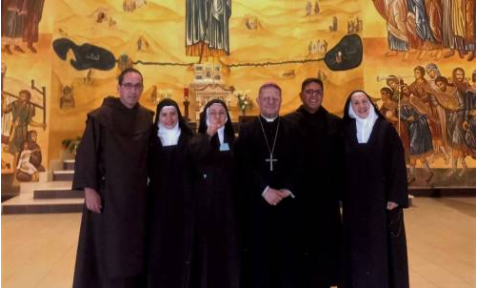
The annual meeting of the Middle Eastern Carmel recently took place with the participation of Discalced Carmelite nuns of that region (from the four monasteries of the Holy Land) as well as from Egypt (Faiyum) and Tangier (Morocco). The theme was “Brothers and Sisters of Carmel of the Middle East: Building fraternity according to Saint Teresa and living it out in our region.” The Discalced Carmelite nuns from Syria and Lebanon participated by means of two written, fraternal letters.

The Carmelite friars were represented by Archbishop Jean Sleiman, Latin Archbishop of Baghdad (Irak); Father Enrique Castro, General Delegate for Israel; Father Patrizio Sciadini, Delegate for Egypt; Father Raymond Abdo, Provincial of Lebanon; Father Miguel Márquez, Provincial of the Iberian Province and responsible for the Carmel of Tangier; Father Guillaume Dehorter, Provincial of Paris and responsible for the convent of Baghdad in Irak; and Father Abdo, pastor of the parish of Saint Joseph in Haifa and counselor of the Holy Land Carmelite nuns.

The meeting took place in Amman, Jordan – the land of the Prophet Elijah – which is easily accessible to all nationalities.

(Source: www.ocdiberica.com)

Our Discalced Carmelite sisters of Bologna, Italy, recount the historic visit:

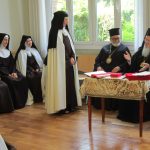
“During his recent stay in Bologna on the occasion of the closing celebrations of the Eucharistic Congress, Ecumenical Patriarch Bartholomew I kindly accepted our invitation and visited our monastery.

“Welcomed festively by the chiming of bells, the Patriarch entered our church. After a hymn and a greeting, we opened the doors of the cloister so that he and his entourage could enter the monastery. He cordially greeted all the nuns. Also present for this event were representatives of the Poor Clares of Bologna and the Carmelites of Ravenna, including an orthodox nun.

“Later we went to the choir where the Patriarch venerated the relics by praying a Hail Mary and an Our Father in Latin. In the recreation hall, he talked to us about how much monastic life in the Church should be appreciated. After exchanging gifts, we engaged in a simple, serene, and very homey dialogue while coffee was served. The Patriarch wrote a blessing in Greek in our guestbook. The joy springing from this small gesture of communion has been great for all of us.”

On 17 August the 75 th death anniversary of late Msgr. Aloysius Maria Benziger ocd (1864-1942) was celebrated at Trivandrum by the Province of Malabar in the presence of Cardinal Clemise, head of the Syro malancara church and the president of the Indian bishops conference, Archbishop Susai Packiam of Trivandrum and many other bishops of the region along with hundreds of priests and religious of whom many carmelites and thousands of faithful from these dioceses.

Bishop Benziger was a discalced Carmelite from Flanders province who was ordained bishop in 1900 and from 1905-1931 was the bishop of Quilone, Kerala. He enjoys great game of sanctity in this region. On this occasion the diocesan process for his beatification was begun with the formal declaration of the archbishop of Trivandrum. The body of bishop Benziger lies in our monastery church at Trivandrum. Fr. Johannes, our definitor for South Asia represented fr. General at this occasion and presented bishop Benziger as a holy leader, true son of St. Teresa and a man for the times. Fr. Sebastian Koodappattu the provincial and the whole province organised the day to be memorable.

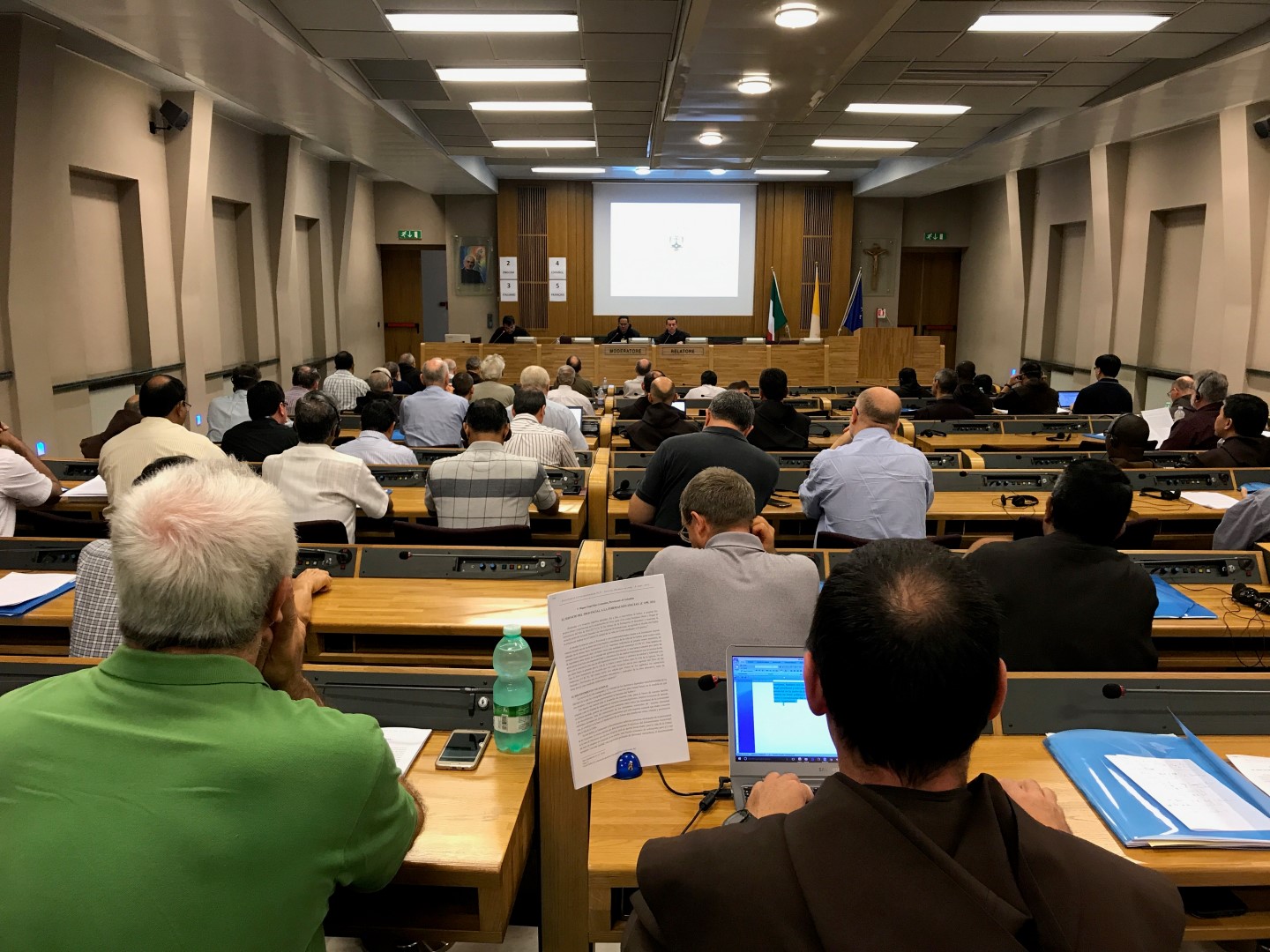
As we have been reporting in detail on our Web page and social media, we held an Extraordinary Definitory in Ariccia, Rome, from August 29th to September 6th in the Pauline family’s “Divin Maestro” retreat house.

The Definitory was divided into three parts: first, the Father General reported on the state of the Order to the major superiors; then the Vicar General reported on the status of the rereading of the Constitutions, a process which was decided upon in the 2015 General Chapter in Ávila. In these first two parts, the representatives of the Circumscriptions were asked to collaborate and express opinions by geographical area.

Lastly, the Superiors – some of who are new to their office – received a formation mini-course developed with help from the General government with the goal of helping the Superiors inspire their Circumscriptions.

The Definitory ended with an interesting conference by Father Agustí Borrell, Vicar General, on religious that are present in the territories of other Circumscriptions. He will send a document to the entire Order for reflection and study. Along the same lines, Father Saverio, Superior General, met with all his Definitors from September 6th through 12th in an ordinary Definitory to analyze the results of the meeting of Ariccia and study the contributions of the regional Superiors.

The Extraordinary Definitory’s last day began with Lauds at 7:00 a.m. enlivened in Italian by the group from Central Europe. Participants went into the meeting room immediately after breakfast, where, after a few moments of prayer led by Father Miguel Márquez, Father Agustí Borrell, Vicar General, gave a conference on an important topic. At the request of the Father General and all the Definitors, this conference was intended to bring about dialogue among the Major Superiors regarding the presence of religious in territories of other Provinces.

After a detailed and well-founded presentation, some questions were suggested. The Superiors studied them for the rest of the morning in their language groups, preparing to present them in the first afternoon session.

Later, the groups had the opportunity to study the message from the Order’s Definitory prepared by an ad hoc committee. After listening to everyone’s suggestions, a vote was held which resulted in the decision that the committee, considering what was said in the meeting room, would make a definitive message which will be made public shortly.

After the session concluded, Father Javier Mena, Definitor General and moderator, thanked all for their participation and collaboration. After a brief intermission, the 2017 OCD General Definitory of Ariccia was concluded with the votive Mass of Saint Teresa of Jesus presided over by Father Saverio, Superior General. Father General asked the Major Superiors to look at and let themselves by looked at by Jesus and listen to him in a Teresian and Sanjuanist spirit.

The General Definitory, presided over by Father Saverio, will meet in the Generalate beginning on September 7th. Among other things, they will analyze the results of this meeting.

We thank God for these days of fraternal communion in which we strengthened our Teresian family ties and have grown in our desire to belong absolutely to Christ following our Holy Mother’s example and helped by the intercession of the Blessed Virgin Mary and Saint Joseph, our Father and Lord.

More information is available on Facebook: “Curia Generalizia Carmelitani Scalzi”; and Twitter: @ocdcuria.

After Sunday, the day of rest, we began work again following the Eucharist which was enlivened by the English speaking group with members from Europe, the United States, East Asia, and Australia.

Father Jean Joseph Bergara, Procurator General, gave the first conference of the day. It was directed to the Major Superiors and dealt with matters regarding their office. With practical and amusing examples, he presented case studies of processes the Superiors may face as a result of differing requests from brothers and sisters under the jurisdiction of the Order.

The next conference was offered by Father Johannes Gorantla, General Definitor, and dealt with the economic administration of the Order. He explained some general aspects regarding the careful use of material resources as well as specific issues regarding, primarily, the provincial economy.

In the afternoon, the Postulator General, Father Romano Gambalunga, gave some guidelines regarding carrying out the beatification and canonization processes. He followed up with an explanation of the importance they have for the spiritual life in the Circumscriptions. He illustrated his reflections with references to two processes currently underway: that of Cardinal Ballestrero and of Sister Lucia of Fatima. The evening session ended with a conference by Father Jérôme Paluku, Secretary for Missionary Cooperation, which informed the Definitory about cooperation projects with the missions.

There was time for the Delegate General from Venezuela, Father Daniel, to give a brief report on the situation in his country. The Definitory will send a letter of solidarity with all the Teresian Carmel in Venezuela.

After Vespers and a fraternal dinner, the members of the Definitory retired until tomorrow, which will be the last workday of this Extraordinary Definitory.

More information is available on Facebook: “Curia Generalizia Carmelitani Scalzi”; and Twitter: @ocdcuria.

This Saturday, in which we commemorate our Mother and Sister, the Blessed Virgin of Mount Carmel, our workday started with Lauds and the Eucharist enlivened by the French-speaking group. Father Fulgence Rakotondrazanany, Commissary of Madagascar, presided, and Father Paul de Bois, Provincial of Flanders, preached the homily in which he encouraged us to follow the example of Mary in accepting and cultivating the talents received from God without worrying about how many they are, but rather about reaping the most fruit with them.

In the meeting room, the moderators, Fathers Javier Mena and Daniel Chowning, General Definitors, introduced the speakers for the morning as they have throughout these days: Father Miguel Ángel Díaz, Provincial of Colombia, gave a conference about the responsibility of the Major Superior in initial formation with many practical examples, and Father Lukasz Kansy, Definitor General, dealt with permanent formation in his conference, delineating its content and the various ways to carry it out.

In the afternoon, the Superiors met in groups by geographical regions or regional conferences. Vespers and dinner concluded the fourth day of the Definitory. Tomorrow, Sunday, will be a day of rest and fraternal meetings among all the participants.

More information is available on Facebook: “Curia Generalizia Carmelitani Scalzi”; and Twitter: @ocdcuria.

On this day, liturgical feast of Saint Teresa Margaret Redi of the Sacred Heart, the Italian group took charge of enlivening the Eucharist that began the day. Father Aldino Cazzago, Provincial of Venice and President of the Interprovincial Conference of Italian Discalced Carmelite Major Superiors presided over the celebration. He encouraged us to reexamine and vivify our friendship with Christ so that it will be a sincere, authentic response to him who loves us so much.

This morning’s work began with a conference given by the Father General on the Province as part of the Order. In this way he started the third part of the Extraordinary Definitory, planned as a mini-course for the major Superiors of the Teresian Carmel that are present here. After a fruitful dialogue and an intermission, the work of the morning continued with a talk by Father Wiesław Kiwior, ocd, about the Provincial as major Superior and Ordinary.

In the afternoon, Father Miguel Márquez, Provincial of Iberia, gave a conference about the visitation of the Province and its pastoral stimulation while Father Umberto Ranieri, ocd, from the Province of Venice, closed the day’s session with a talk on the structures of collegial governance.

After prayer, vespers, and dinner, the third day of work was concluded. Participants of the General Definitory wish to thank our sisters the Nuns as well as Secular Carmelites and Friars from different parts of the world for all the expressions of closeness and prayer received throughout these days.

For more information find us on Facebook: “Curia Generalizia Carmelitani Scalzi”; and Twitter: @ocdcuria.

Today’s liturgy was organized by the group from India. The Eucharist that opened the second day of our Extraordinary Definitory was presided over by Father Johannes Gorantla, General Definitor, specially in charge of South Asia.

The morning was entirely dedicated to the process of rereading the Constitutions, an undertaking begun after the General Chapter held in Ávila in 2015. First, the Vicar General and president of the international committee named by the Definitor, Father Agustí Borrell, recalled the origin of the project and reported on the steps taken to date. Father Emilio Martínez, secretary of the committee, presented to the Major Superiors some statistical data regarding the participation of the Circumscriptions in the rereading process and read a summary of the comments received by the Committee so far. After a brief pause, the Vicar General took the floor once again. He expressed appreciation for the material received and shared possible avenues for the process going forward. Father Wiesław Kiwior, Committee member and expert canonist, closed the morning session with a presentation on law specific to the Order.

Participants met in language groups to discuss the presentations of the morning. Afterward, the Superiors returned to the classroom to share their impressions about both the Father General’s report given yesterday and the process of rereading the Constitutions. The dialogue was very lively and lasted well into the afternoon.

The day ended with vespers and a lively and fraternal dinner.

More information on Facebook: “Curia Generalizia Carmelitani Scalzi” and Twitter: @ocdcuria.

The day began with the Eucharist prepared by the group from Latin America and the Caribbean and presided over by the Vicar General of the Order, Father Agustí Borrell. It marked the beginning of the Extraordinary Definitory of the Discalced Carmelites that will be celebrated in the “Casa Divin Maestro” in Ariccia, near Rome, through September 6th.

Father General began work in the meeting room with a “Report on the State of the Order” which is available as a video and in text on this webpage. Immediately following that presentation, Definitory participants met by language groups to discuss Father Saverio’s presentation.

In the afternoon, the Bursar General, Father Attilio Ghisleri, informed the Major Superiors about the economic state of the Order. Father Rafał Wilkowski, Secretary for the Nuns, followed with a presentation on Pope Francis’ Apostolic Constitution on contemplative life, Vultum Dei Quarere, from a Teresian perspective.

On finishing the afternoon session, the members of the Definitory met to pray Vespers and for dinner, thus ending the first day.

The work of the Definitory can be followed on Facebook: “Curia Generalizia Carmelitani Scalzi”, Twitter: @ocdcuria and Photo Gallery

Eight months from the arrival of our Discalced Carmelite sisters in Panama, we share a brief account of their first steps in this Central American country:

“We arrived enthusiastically in Panama on January 23, 2017. The foundation was inaugurated on the 25th with the participation of Bishop Bertram Wick, Bishop of Santo Domingo in Ecuador, and Bishop Manuel Ochogavía, Bishop of Colón, who petitioned us to come and in whose diocese we are. The provincials of Central America and Colombia, the provincial delegate of Ecuador, many priests, religious from various communities, and laity were also present. They had yearned and prayed for many years for a convent of Carmelites in their country. There were about 500 persons present.

In these past months we have felt the warm welcome, closeness, and concern of the people who with generosity and affection have given us support as far as their means allow. Spiritually, we are fortified with the daily Eucharist and with the accompaniment of our Carmelite fathers, who help us live our life of prayer, fraternity, and work.

The place the Diocese has donated to us is very beautiful, full of vegetation (it is a part of a 21-hectare ecological preserve), and the silent environment helps us in our way of life. Here everything speaks to us of God. We also have a Shrine of the Blessed Virgin to which is  affixed a small house with five rooms and an oratory where we pray the liturgy.

For our financial sustence we are planning to make hosts, since in the entire countrly only one community does this work, and we perceive the need to collaborate in this.

Until we receive the machines to make the hosts, in about one year, we have occupied ourselves with making scapulars and once a week, we bake bread which is sold in the church of our Carmelite friars. This small income is a help to pay for the host machines little by little. The Lord himself provides everything necessary for our projects, and we feel his care and love for us manifested through the generosity of the people.

We are currently working on the plans for our Monastery and searching for the means to build it, always trusting in his Divine Providence.

For our part, we are very happy that there is another tabernacle where the Lord is loved and glorified and that our Order and Teresian Spirituality is spreading.

We ask for your prayer so that we may faithfully accomplish the mission entrusted to us and witness to the Presence of God in the world, and especially in this particular church of Colón Kuna Yala.

Carmelite Nuns of Panama”