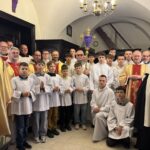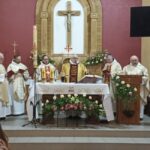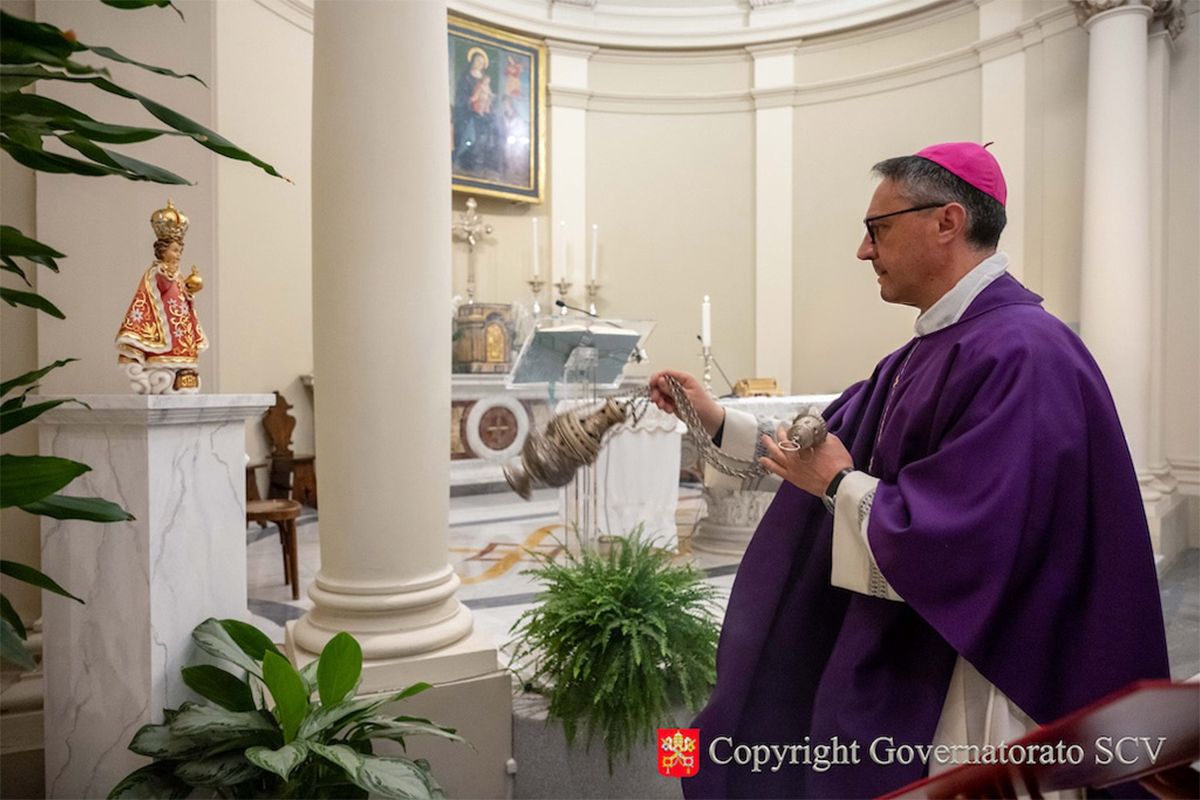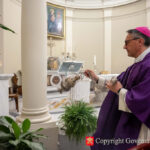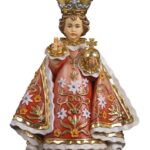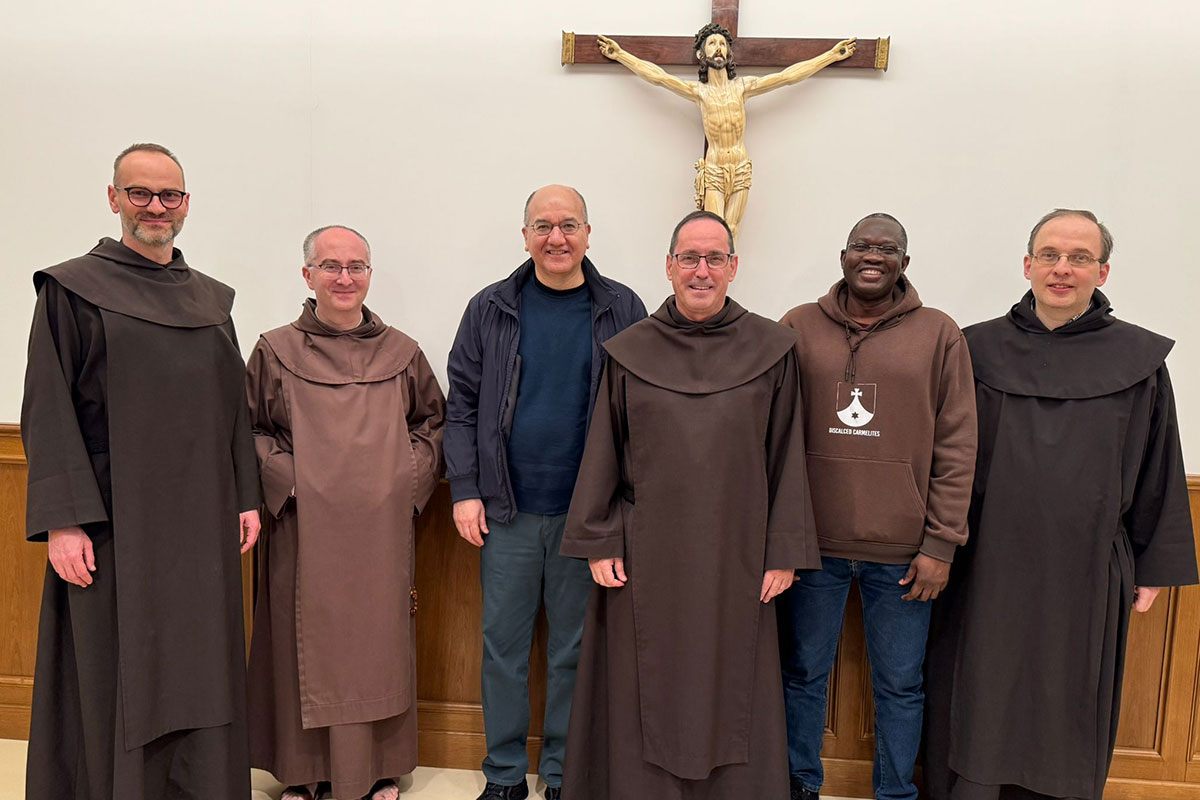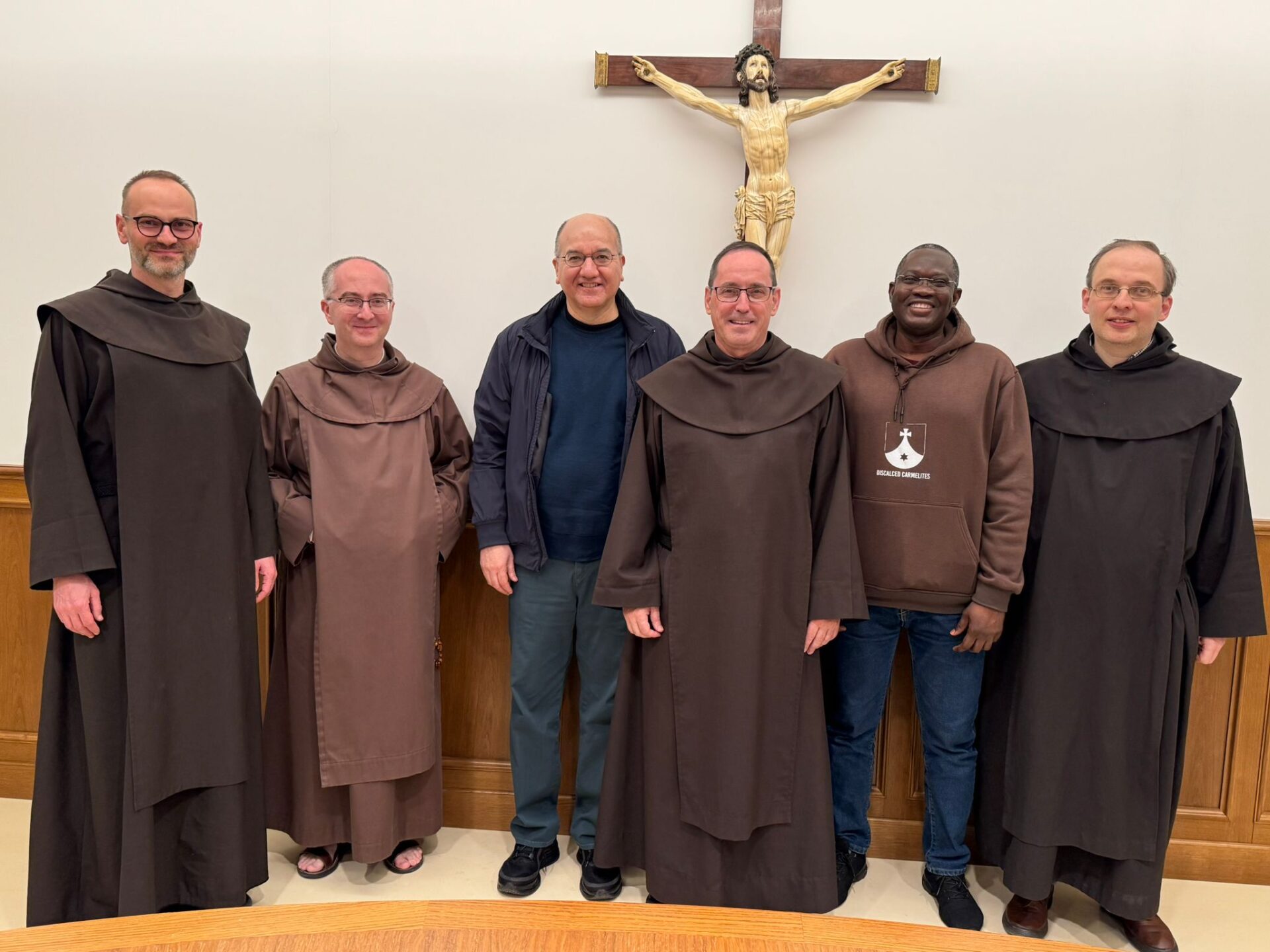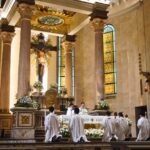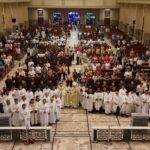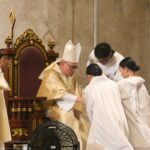
A wooden statue of the Infant Jesus is now present in the Church of Mary, Mother of the Family, in the Governorate building. It was donated by the community of the Discalced Carmelites of the Shrine of Arenzano (Genoa). The enthronement ceremony took place on Thursday afternoon, March 26, in the presence of Cardinal Domenico Calcagno, President Emeritus of the Administration of the Patrimony of the Apostolic See, who also presided over the Holy Mass. Receiving the gift were Sr. Raffaella Petrini, President of the Governorate of the Vatican City State, and Archbishop Emilio Nappa, Secretary General.

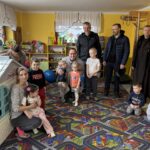
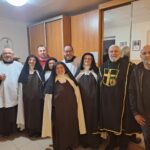
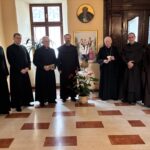
A delegation from the Shrine of the Infant Jesus was present, led by Father Domenico Rossi, Vice Prior, Father Pierluigi Canobbio, and Father Marco Cabula, Rector of the Minor Seminary, together with some seminarians and students from Genoa.

https://www.vaticanstate.va/en/news/3923-the-shrine-of-arenzano-genoa-donates-a-wooden-statue-of-the-infant-jesus-to-vatican-city-state.html

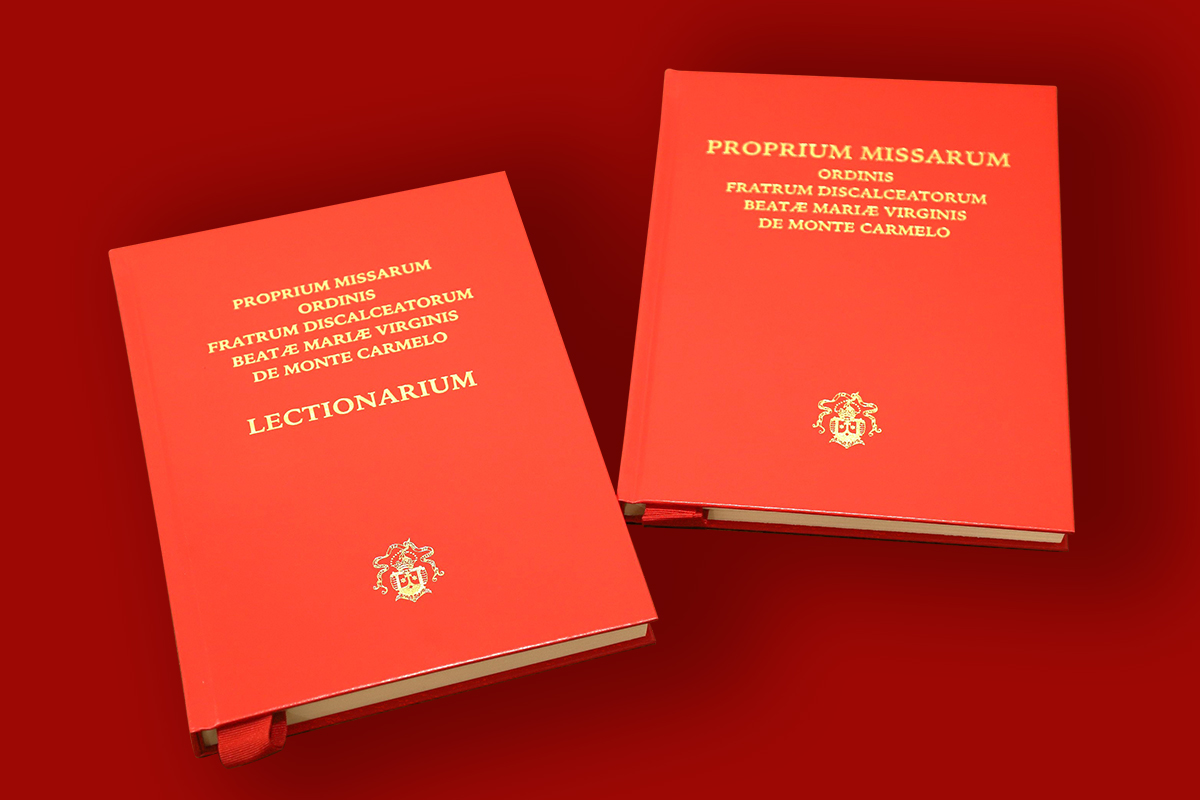
On 16th July 2025, the Dicastery approved the Editio typica altera of the Proprium Missarum OCD.

Following its printing and initial distribution, the official Latin text is now available on our website: https://www.carmelitaniscalzi.com/proprium-missarum-ocd-missale-lectionarium-latino/

Those wishing to obtain both volumes (Missal + Lectionary) in altar edition may contact the General Postulation. Translations into local languages are currently under way in the various geographical regions.

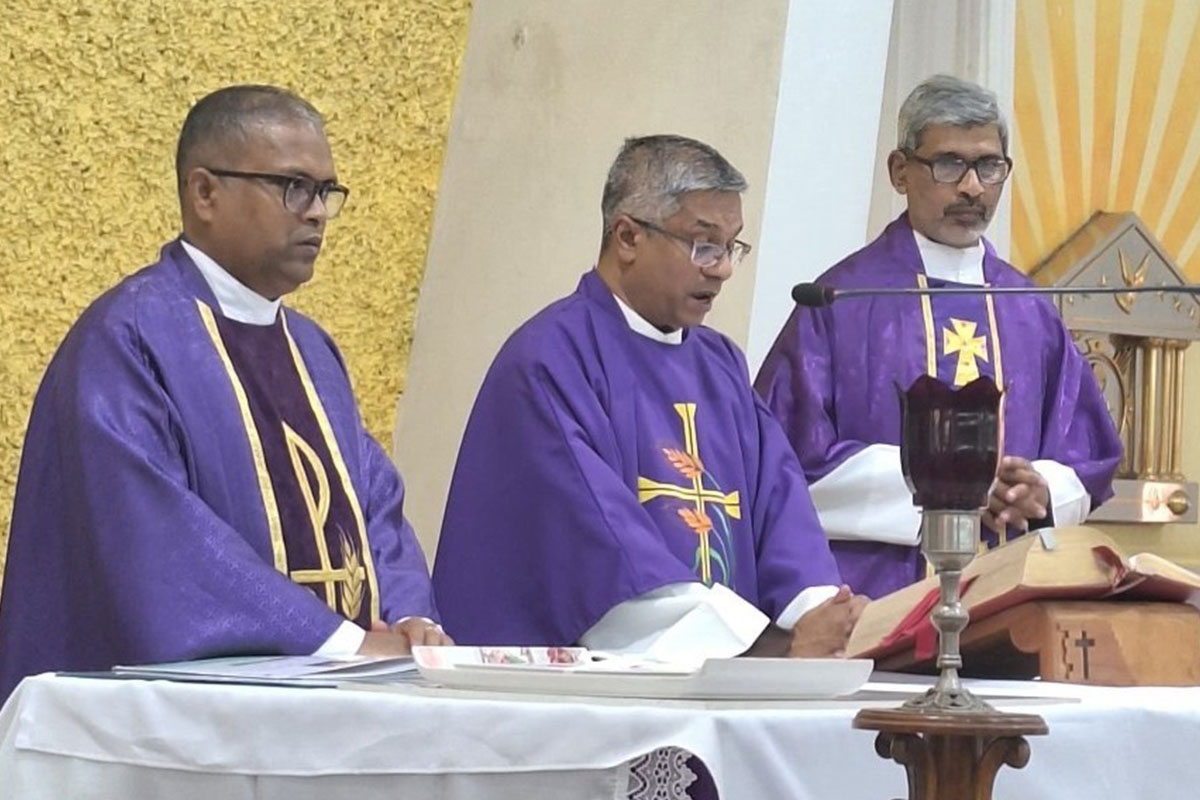
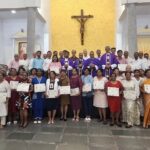
On March 1, participants of the Bible Course on the Parables of Jesus were awarded diplomas and formally commissioned as Biblical Animators during a solemn Eucharistic celebration at the Carmelite Monastery, Margao. The Eucharist was presided over by Fr. Silvestre D’Souza, Provincial Superior of the Karnataka-Goa Province, with concelebrants including Fr. Mariano D’Costa, Director of the Diocesan Centre for Biblical Apostolate, and Fr. Marlon Rodrigues, Superior of the Carmelite Convent.
Following the Mass, the Rite of Commissioning formally entrusted the newly trained animators with the mission of carrying the Word of God into families and parish communities. The Diploma Day, organisers noted, signified not only academic completion but a pastoral mandate to witness to Scripture in daily life.

The celebration in Margao stood as a renewed call to discipleship—sending forth lay faithful formed in Scripture to proclaim the transforming power of God’s Word in Church and society.


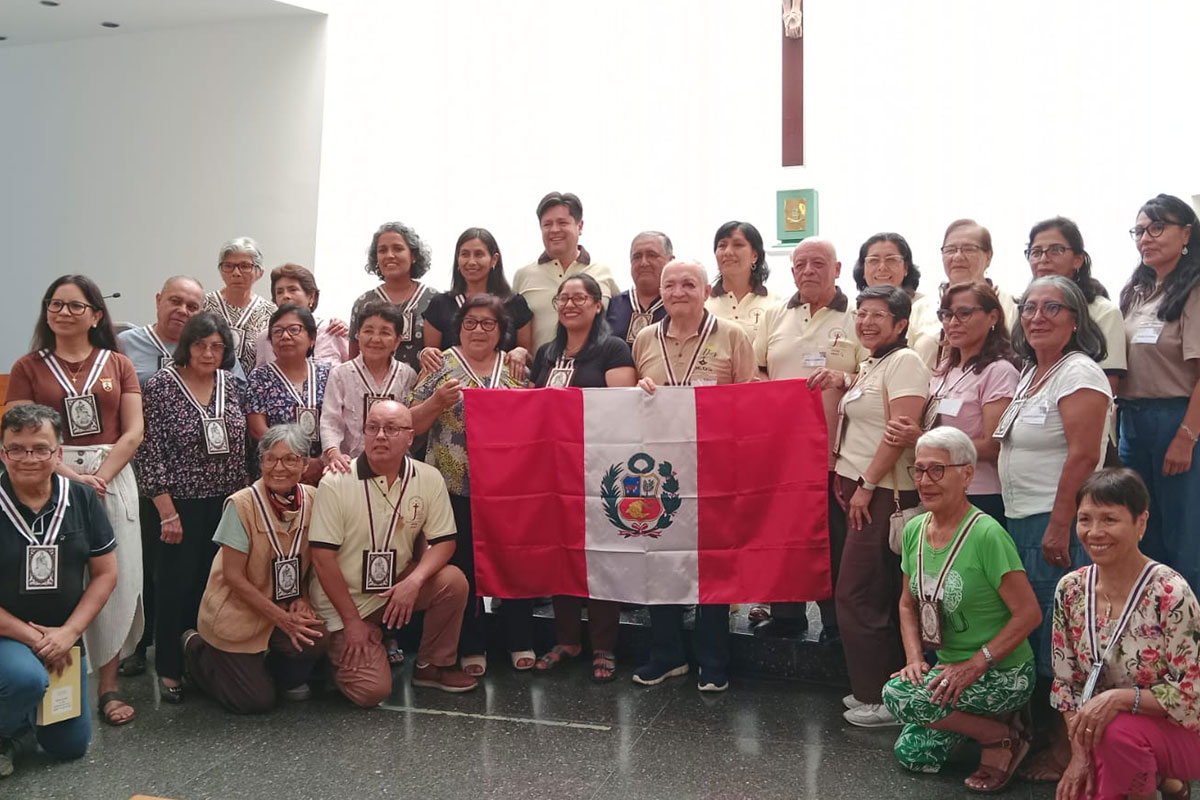
‘My only occupation now is loving. A spiritual itinerary according to St John of the Cross’ was the title of the annual OCDS retreat held in Peru from 6 to 8 March 2026 at the Spiritual Centre of the Daughters of Charity in Lima. The retreat brought together 75 brothers and sisters from the communities of Abancay, Arequipa, Cusco, Ica, Lima and Trujillo.

Led by Br Jairo Gómez Díaz, OCD, from the Province of Colombia, the retreat offered participants a spiritual journey in the footsteps of St John of the Cross. Br Jairo began by immersing participants in the places associated with St John, before offering an overview of his major works: the Spiritual Canticle, the Ascent, the Dark Night, and the Living Flame. He then provided an overview of St John’s anthropology. Br Jairo emphasised that our life of prayer must ‘occupy our intellect with the person of Christ’ – by meditating day and night on the Word of the Lord, as our Rule enjoins, and by receiving Holy Communion frequently.

The retreat encouraged us to allow ourselves to be loved by God, to focus on Jesus and to let the Holy Spirit ignite the flame of his love in our hearts, thereby transforming us and enabling us to love others as he loves us.


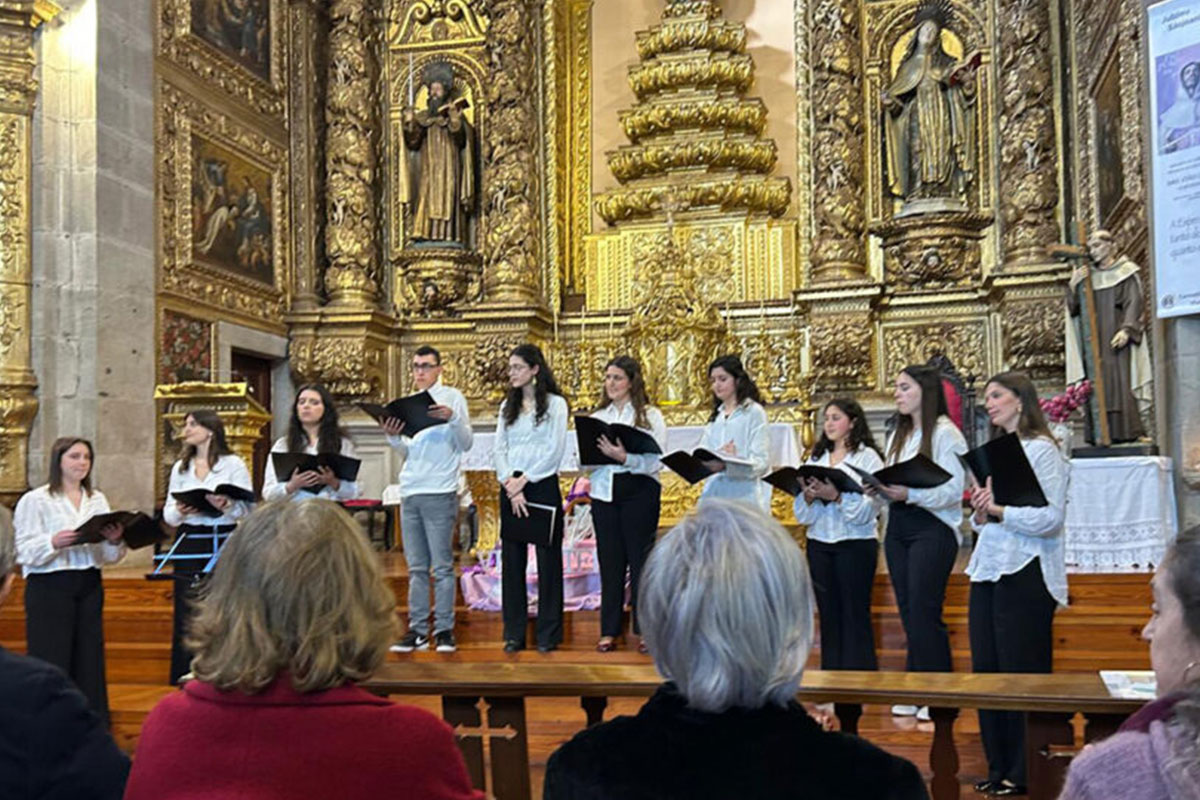
On the afternoon of Saturday 7 March, the Carmelite church in Viana do Castelo was filled to capacity for a Jubilee Concert celebrating the anniversaries of the canonisation and Doctorate of St John of the Cross.

The event began at 5 p.m. and featured the Vozes Brancas choir, which is associated with the Carmelite community. The occasion was marked by music, poetry and prayer. The diverse congregation, drawn from all ages, backgrounds and sensibilities, added to the atmosphere of genuine communion and festive joy.

Moving between choral harmonies, poetic texts and moments of spiritual reflection, the concert was an encounter with faith, culture and beauty that was experienced with great intensity by all in attendance. The Discalced Carmelite community of Viana do Castelo expressed its gratitude to all who participated in and helped to make this celebration unforgettable.


From 9 to 14 March, the city of Segovia hosted a seminar organised by the Discalced Carmelite Nuns of Spain. The seminar was devoted to a deeper study of the life and work of St John of the Cross, to mark the centenary of his proclamation as a Doctor of the Church.

The sessions were led by Fr Salvador Ros OCD, who guided the participants through the life, thought, and spiritual richness of this great mystic of Carmel. During the sessions, the fundamental aspects of his doctrine, spiritual experience and poetic work were explored in depth.

These days offered an opportunity to rediscover the abiding relevance of St John of the Cross’s message in a year of particular significance for the Carmelite family, providing a time of study, prayer, and encounter with the spiritual tradition of Carmel.


The Commission responsible for revising the Ratio Formationis met at the Generalate from 14 to 20 March 2026. This meeting marks the final stage of work that began in March 2022.

In the preceding months, the members of the Commission worked in language groups to incorporate observations and suggestions submitted by the circumscriptions of the Order throughout the process: the English-speaking group (Fr Daniel Chowning, Washington; Fr Thaddeus Chike Dim, Nigeria; Fr Grzegorz Tyma, Kraków; Fr Haluendo Amit, Philippines), the Spanish-speaking group (Fr Martín Martínez, General Definitory; Fr Pascual Gil, Iberian Province), the Italian-speaking group (Fr Pawel Porwit, International College; Br Claudio Grana, Genoa), and the French-speaking group (Fr Jean-Baptiste Pagabelegem, General Definitory; Fr Anthony-Joseph Pinelli, Paris).

During this final week, the friars succeeded in producing a complete text, which will be presented to the General Definitory in June 2026. Following this, the new Ratio Formationis will be presented to the Order as a whole.

At the working session on Tuesday afternoon, 17 March, the Commission was joined by the Father General, who was thus able to express his support and interest in the work once again. This work represents one of the priorities of the current sexennium.


The 67th Spirituality Week, held from 1 to 5 March at the Teresianum, was an intense period of reflection and “theology for all.” This year’s theme, ‘Seeing the Invisible: Pathways towards a Spirituality of the Image’, invited participants to look beyond what the eyes perceive and open themselves to a deeper understanding of the mystery of faith.

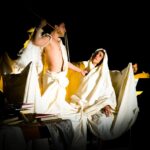
There was certainly no shortage of academic, theological and philosophical reflection throughout the week, but more pastoral contributions were also offered, bringing theological thought into dialogue with the practical life of the Church. Considerable attention was given to art, too – through reflections on the role of images and icons in the Christian tradition and a theatrical performance. Art is a space of genuine mystagogy. One day was dedicated to the Carmelite dimension, allowing for a deeper appreciation of the richness of our spiritual tradition.

The week was therefore a powerful occasion on which theology, art and spiritual life converged, in keeping with the “sapiential theology” championed by Popes Francis and Leo XIV. We came to understand that the great miracle lies not only in ‘seeing the invisible’, but also in learning to truly see what is visible – with the eyes of Christ.

As usual, the proceedings of the 67th Spirituality Week will be published in the Fiamma Viva collection from Edizioni OCD in autumn, but they can be viewed in advance at:

https://youtube.com/playlist?list=PLSAYQ55Ja8k1A9O87pjaFIB3ujemToH__&si=KoZPqVE1q1NL6V5s


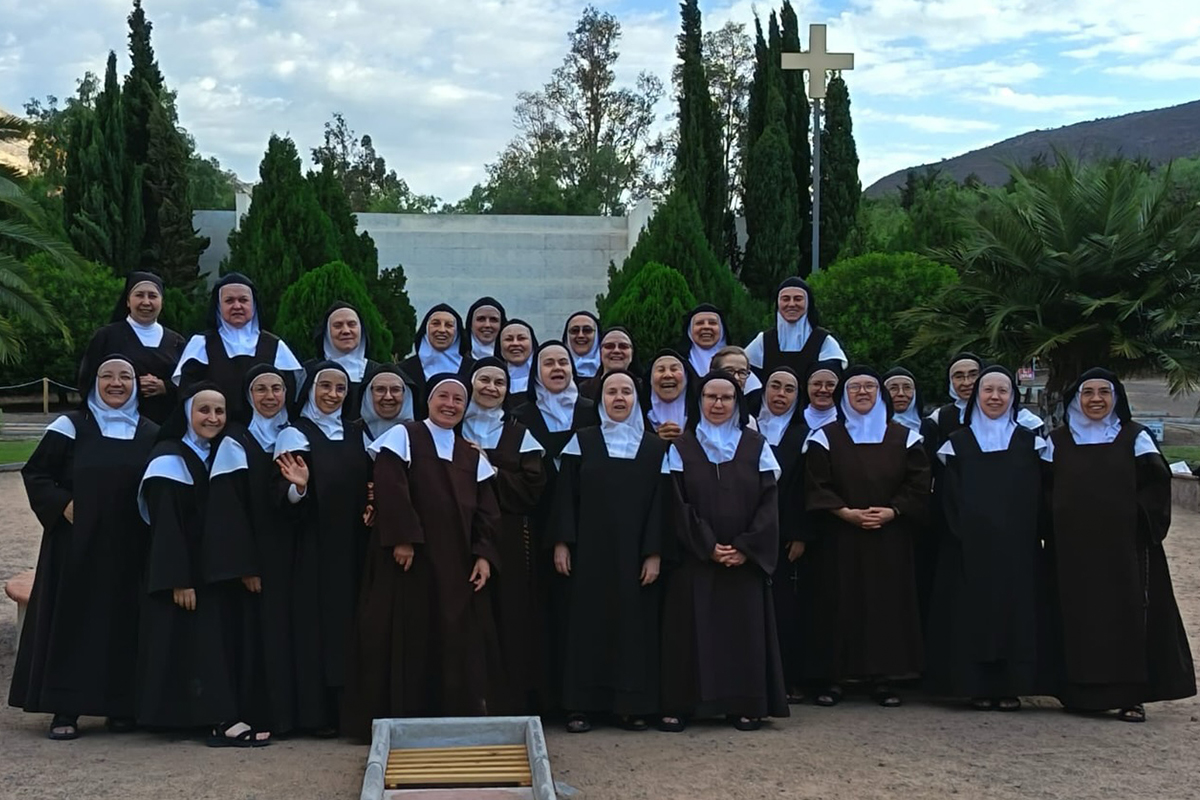
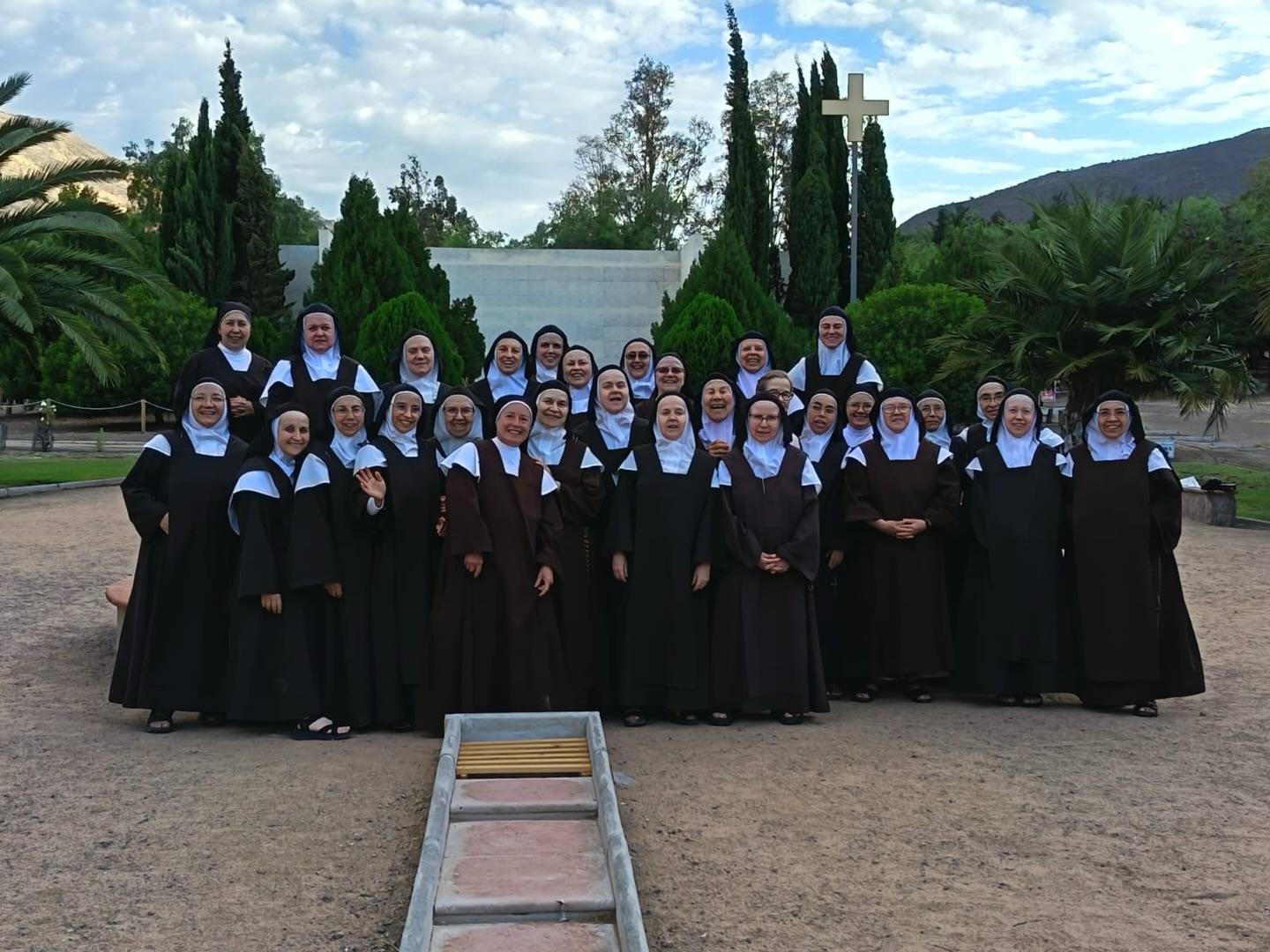
The Association of Carmelite Sisters in Chile had a deeply enriching experience taking part in a spirituality course organised at the Sanctuary of St Teresa of Los Andes in Auco.

Sixty-three sisters from monasteries across the country gathered to share moments of prayer, reflection, and fellowship. The central theme of the meeting was: “A Journey into the Depths of the Soul with Teresa of Ávila and John of the Cross”.

The Casa de Espiritualidad offered a warm welcome and created an environment conducive to silence, contemplation, and fraternal encounters. These days were characterised by spiritual depth and the joy of living our consecrated lives in communion.


The second Joint General Assembly of the Superiors of the Discalced Carmelites of Africa and Madagascar took place in Enugu from 26 to 30 January 2026. It brought together 22 participants representing 21 of the 22 countries of sub-Saharan Africa and the islands of the Indian Ocean, alongside the two General Definitors for Africa, Fr Jean-Baptiste Pagabeleguem and Fr Philbert Namphande.

Participants shared their experiences of the lived reality of the Order’s charism and spirituality, its lifestyle, and its current challenges, including formation, governance, self-sustainability, collaboration, and restructuring.

The Father General addressed the participants in a letter to express his solidarity with the Discalced Carmelites in Africa and invited them to reflect on the specific challenges facing Carmelites on the continent.
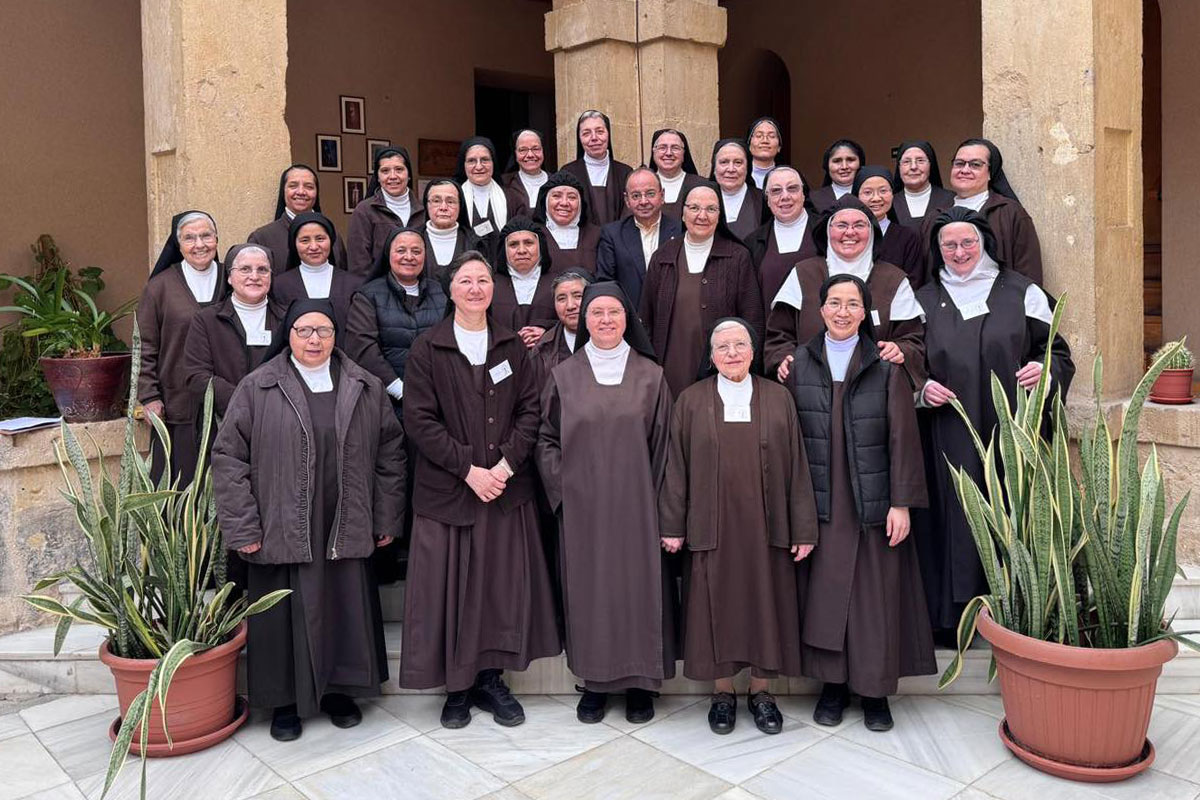
At the conclusion of the assembly, the participants departed feeling renewed and strengthened, ready to continue their work within their respective circumscriptions. The next gathering is scheduled for 2029, when a formation congress is planned to take place in Nigeria.
 

From 14 to 17 February, the Carmelite brothers of New Manila, Quezon City, celebrated a triduum to mark the 50th anniversary of the erection of the Basilica as a parish. The closing Celebration was presided over by the Most Rev. Honesto Ongtioco, D.D., Bishop Emeritus of Cubao.

For fifty years, this Basilica has been a home— a place where the poor are welcomed, the young are formed, the wounded are healed, and all who seek the Lord find strength. This Jubilee celebration is not only a time for remembering, but also for renewing. May this sacred place always listen to the cries of the people!

After the Holy Eucharist, the community gathered beyond the main entrance gate, where a lively band welcomed everyone with joyful music that filled the air with celebration. This was followed by a series of heartfelt performances, as the community came together in song and dance. More than mere entertainment, the gathering became a beautiful expression of thanksgiving, a reminder that the Basilica is not simply a structure of stone, but a living community strengthened by shared faith, service, and hope.


From 2 to 6 February, the Province of Venice organised in Fatima (Portugal) a brief yet intense Marian formation session, intended primarily for novices and students, in response to the invitation of the Father General to deepen the Marian dimension of our charism.

Led by our Provincial, Fr Giuseppe Pozzobon, the programme alternated between formation sessions led by the Father General and Sr Angela Coelho (Vice-Postulator of the cause for the canonisation of Sr Lucia), and visits to the apparition sites: the Capelinha at Cova da Iria, the Basilica of Our Lady of the Rosary, the modern Basilica of the Holy Trinity, the Immaculate Heart exhibition, and the village of Aljustrel.

Accommodated at Domus Carmeli, just a short walk from the apparition sites, the twenty pilgrims were able to spend several days in reflection. They also had the opportunity to meet the Carmelite nuns of Fátima and Coimbra, whose testimony about Sister Lucia was particularly enlightening.

The essence of the entire experience can be summed up in the rediscovery of the radically evangelical nature of the message of Fátima: a maternal call to conversion that transcends affective devotion and seeks to be expressed through an intense sacramental life and persevering prayer. This prayer has the power to provide a solid foundation for the life of every baptised person.


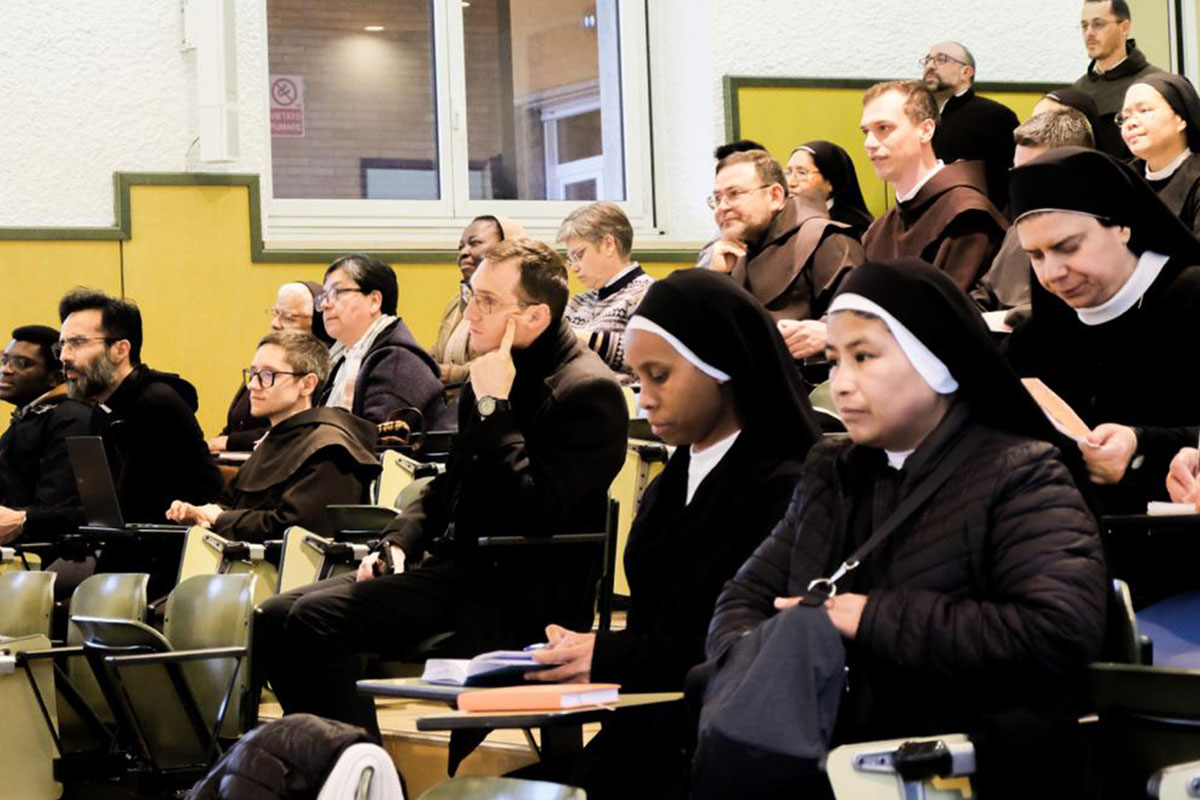
CITeS hosted the European Meeting of Formators from 9 to 13 February. This gathering brought together individuals responsible for initial formation within the European OCD provinces, providing an opportunity to collectively reflect on formation processes and the challenges currently facing the Order.

The speakers were the formators themselves. Each was given 15 minutes to present his experience: how initiation into mental prayer is carried out in his circumscription at the various stages of formation, the difficulties encountered, and the tools employed.

On Tuesday, the formators visited the Monastery of the Incarnation, on Wednesday they visited Duruelo, and on Thursday they visited Segovia. It was a simple yet meaningful initiative: returning to the sources in order to continue moving forward with hope.

This meeting enabled us to share insights and suggestions, strengthen communion among the European provinces and renew our commitment to integral formation that remains faithful to the Teresian–Sanjuanist charism while addressing the challenges of the present day.


The San Juan de la Cruz, Esperanza de alto Vuelo exhibition, which is currently on display in Alba de Tormes as part of the centenary commemorations of Saint John of the Cross, features one of the saint’s most significant historical and scientific elements: a reconstruction of Saint John of the Cross’s face.

The study Fisonomía original de San Juan de la Cruz outlines the process that made it possible to approximate the true appearance of the Mystical Doctor. This process began in Segovia in 1992, on the occasion of the fourth centenary of his death, with the canonical recognition of his remains. Under the direction of Dr Massimo Benedettucci, the scientific reconstruction of the face was carried out using the saint’s skull.

The technique involved producing a plaster cast, anatomically reconstructing the muscles and soft tissues, and interpreting those features not directly defined by the bone structure by drawing upon historical descriptions — particularly those of Fr Jerome of St Joseph (Ezquerra de Rozas). The reconstruction was then transformed into a bust using the lost-wax technique at the Fonderia Artistica Cavallari in Rome. Finally, the artist Alejandro López Araguez completed the bust using traditional oil polychromy, giving the final work greater realism and expressive depth.