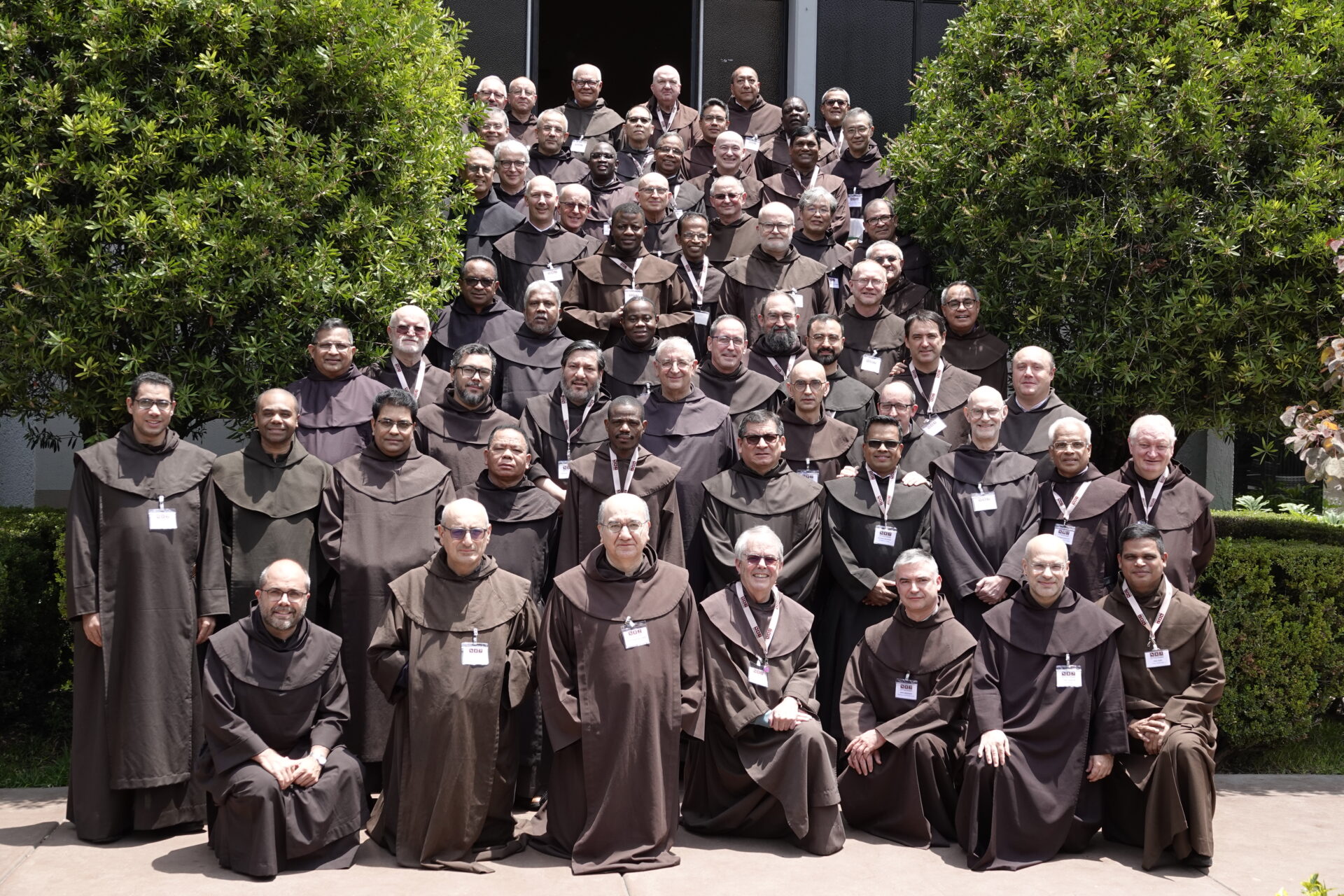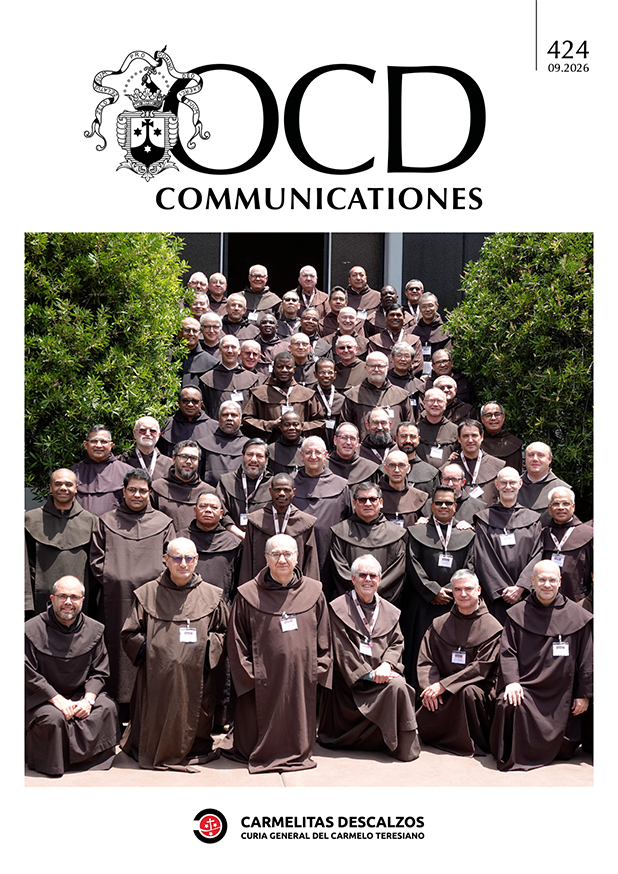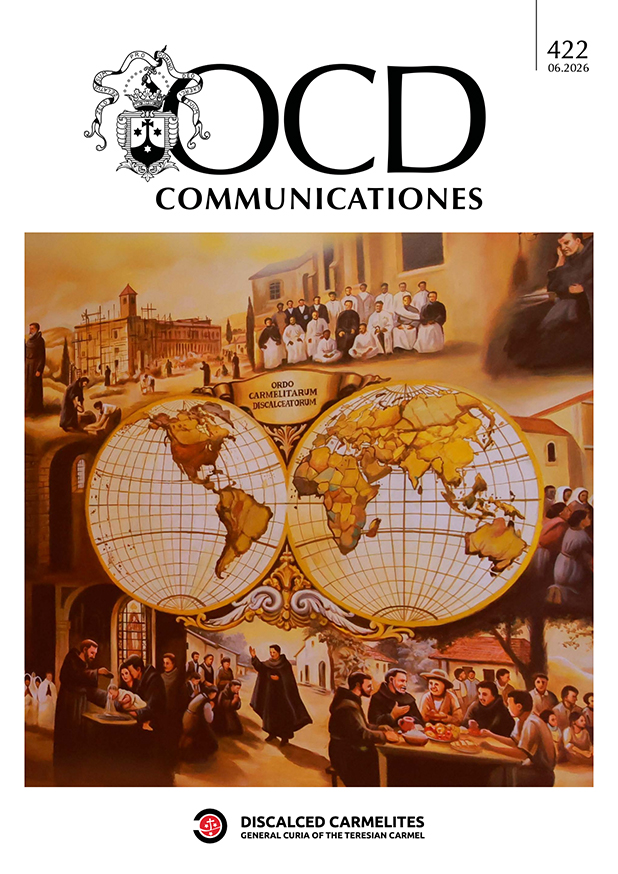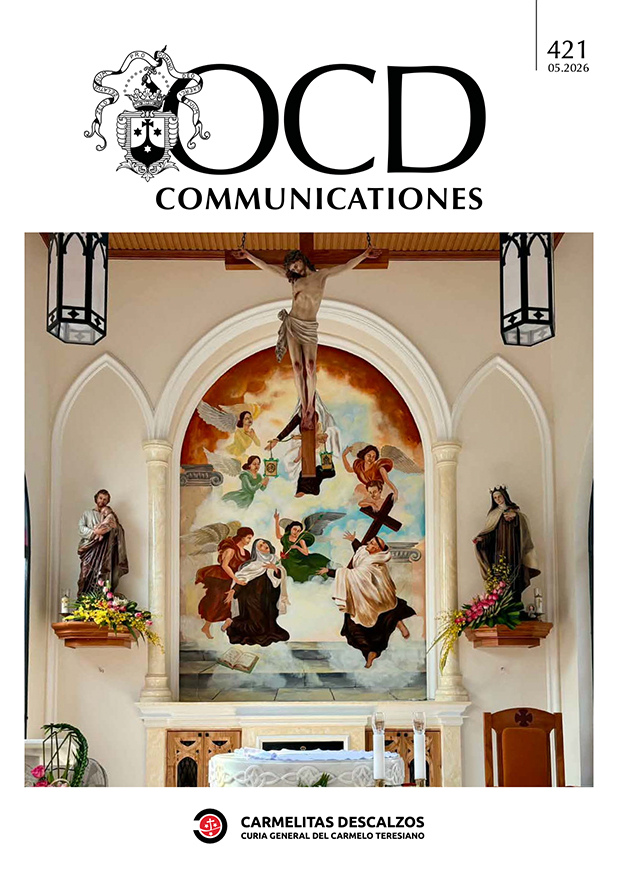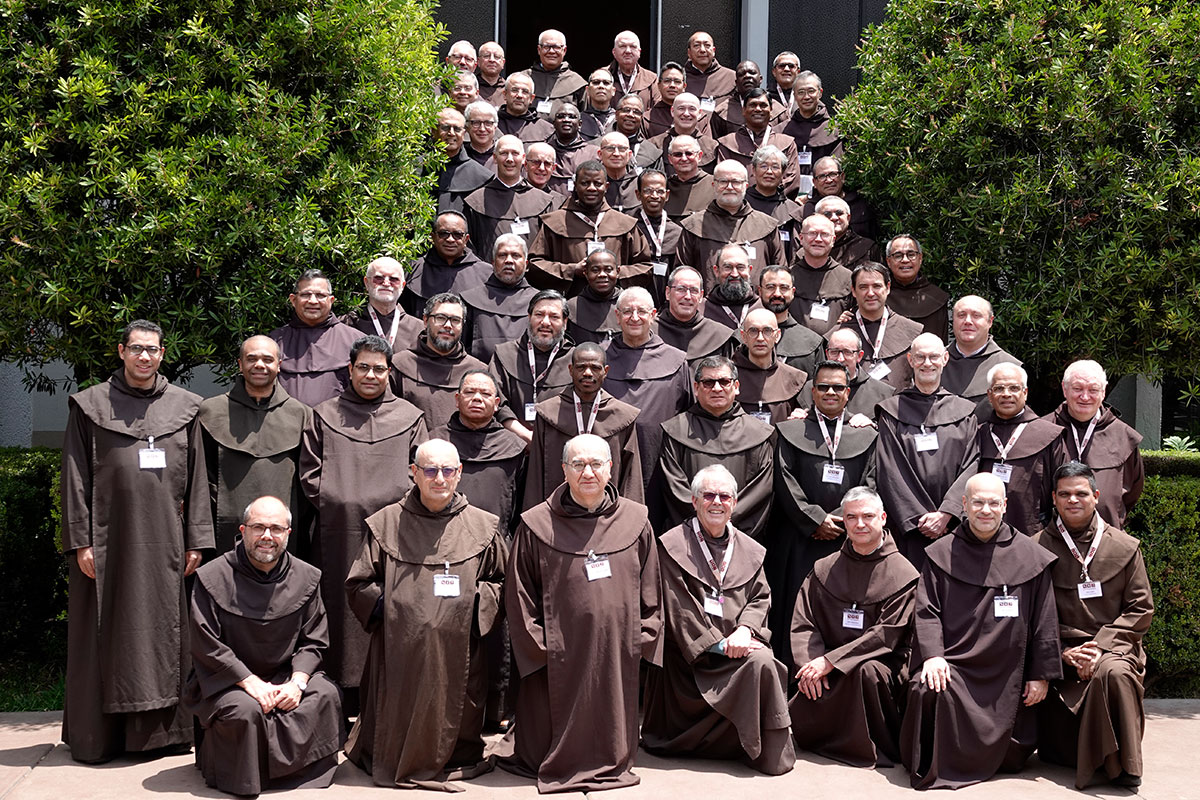
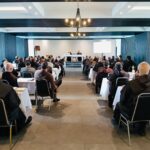
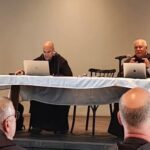
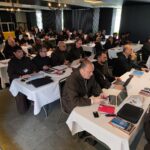
From 31 August to 8 September, the Extraordinary Definitory met in Mexico City at the Centro cultural Quinta Soledad. In attendance were the Father General and his Definitors, the Superiors of 25 provinces, 5 semi-provinces, 11 commissariats, 6 vicariates and delegations, as well as 7 officials from the General Curia. Discussions centred on various topics relating to the life of our Order and on preparations for the next General Chapter (May 2027). Here we present an overview of our work.
Monday 31 August
The participants were warmly welcomed by the Provincial of Mexico, Father Ricardo Perez. After duly thanking the Provincial and the brothers of Mexico for their hospitality towards this Definitory, Father General Miguel Márquez took the floor. His presentation on the state of the Order centred on four main themes:
- the Word of God as a light on our path, through three quotations: ‘Am I my brother’s keeper?’ (Gen 4:9), which challenges us on the quality of our fraternal life; ‘Look up at the sky and count the stars, if you are able… so shall your descendants be ’ (Gen 15:5), which challenges us on our faith in what God can accomplish; ‘These all continued with one accord in prayer and supplication, with the women and Mary the mother of Jesus, and with His brethren’ (Acts 1:14), which challenges us on the quality of our prayer.
- Putting Christ at the centre: we are called to believe in the journey rather than the destination, to make room for the unexpected by opening our hearts to the newness of Christ.
- Reflecting on the journey undertaken over the last five years.
- Responses to the Letter from the Father General to the Provincial Chapters.
At the end of his talk, Father Miguel presented some questions, on which the language and geographical groups (English, French, Spanish, Italian) exchanged views during the afternoon session.
After the coffee break, Father Paolo de Carli, General Bursar, took the floor to discuss three key topics concerning the financial management of the General House, the provinces’ contribution to the life of the Order, and investment in formation (Teresianum, International College and Seminarium missionum).
Tuesday 1 September
The day began with a historical and canonical presentation by Fr Agustì Borrell on the structure of our Order and recent developments in this area. On the one hand, our Order has always been composed of provinces, that is to say, circumscriptions with sufficient autonomy in matters of governance, formation, apostolate, mission and finances. From a certain point onwards, however, smaller circumscriptions began to multiply, both in number and in type. Historically, these were regarded as temporary stages in preparation for the creation of a new province, or as a response to the exceptional downsizing of a province. However, this considerable freedom of organization began to encounter structural problems. The Extraordinary Definitory of Lisieux (2023) proposed new guidelines aimed at simplifying and reducing the types of districts.
After the coffee break, we listened to a presentation by Fr Jean-Baptiste Pagabeleguem on formation. Since the 92nd General Chapter (2021), the Order decided to focus more on formation and made it one of its priorities for this sexennium. The Definitory has set up an international commission not only to update the Ratio institutionis, but also to raise awareness throughout the Order of our identity and mission. Formation is a fundamental priority for the Teresian Carmel as it ensures fidelity to the charism, the stability of the communities and the transmission of a way of life rooted in prayer, fraternity and the apostolate.
The afternoon was once again dedicated to meetings by language groups.
Wednesday 2 September
The Definitors General presented to us the areas under their responsibility: young and rapidly growing provinces, which are striving to establish appropriate structures and training programs; historic provinces called upon to collaborate, or even to merge, in order to prioritize the quality of the charismatic life of each community; territories that are steadily shrinking, to the point of likely disappearing, but which continue humbly to bear witness through their presence. All this shows that every experience, whether positive or challenging, belongs to us all, as the diverse expression – through age, wounds and splendor – of one and the same family.
In the afternoon, Father Daniel Chowning described to us the role and function of the Superior Provincial, drawing on his own experience as well as on sound biblical, canonical and charismatic arguments. We were reminded that the Provincial is not the chief executive of a company, who has positions of power to defend or profits to make: he is a brother entrusted with a ministry, which is furthermore temporary, and which he will, indeed, have to learn to relinquish when the time comes. To fulfil this mission, which is ultimately made possible only by Grace, one must nevertheless possess certain fundamental qualities and develop others: maturity not only in years but also in the heart, which is expressed through a practical ability to listen, to discern and to make decisions, as well as through self-knowledge, not only of one’s frailties and sin, but above all, of the way in which one is infinitely loved and forgiven by the Father, in Christ.
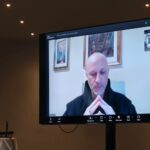
The meaning of our unity, throughout the day, ultimately came across with unique force through the testimonies of two of our brothers, called upon to share their experiences of their Carmelite life in particularly tragic contexts. The first, Fr Rafał, explained what it means to be a Carmelite today in a country at war, such as Ukraine. Next, Fr Michel spoke to us about Lebanon, a country that has been at war for over 50 years. Listening to these two testimonies, which place our vocation and our ministry in direct relation to human death and suffering, reminded us that, very often, many of our problems are not so serious and that we can give thanks to God for the many gifts we have received.
Thursday 3 September
Father Angelo’s talk enabled us to discover the Handbook for provincial government: this is a resource which does not claim to cover every issue a provincial government might face, but which offers some guidance and clarification designed to assist the Superior in carrying out his duties. You can download it here:
Perhaps the most important thing to remember is the pedagogical principle underpinning this document, which, above all, lies at the heart of a Provincial’s mission: a Superior does not govern alone, not only because he acts in dialogue with his Council, the priors, the formators and the communities, but also because he acts within the framework provided by laws which are ultimately inspired by truth, charity and justice.
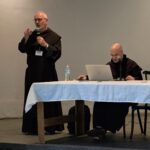
In the same vein, Fr Rafal Wilkosky’s presentation highlighted how the role and function of the Provincial Superior in relation to our Nuns are currently evolving. He showed how relations between the Superiors of the Order and the monasteries of the Discalced Carmelites Nuns have undergone a profound transformation over the last century, both legally and ecclesiologically. Whilst, up until the Second Vatican Council, these relations were characterised by the effective jurisdiction of the friar superiors over the communities of nuns, subsequent legislation gradually redefined this approach, recognising the full autonomy of the monasteries. This normative development culminated in the Apostolic Constitution Vultum Dei quaerere (2016) and the Instruction Cor orans (2018), which led to a process of revising the Order’s own law. In particular, the need to redefine the role of the Order’s Superiors has become clear: this no longer consists of direct jurisdiction, but rather of vigilance and pastoral care, whilst respecting the specific nature of the contemplative life. Furthermore, this change also reflects a different understanding of charismatic communion and shared responsibility within the Teresian family.
Friday 4 September
The day began with a talk by Father Jérôme Paluku, Secretary for Missionary Cooperation. His reflections took as their starting point a rapidly changing international context: whilst before 2008 the Western world enjoyed a situation of abundance, we have now moved to a situation where those providing funding do so only if they are fully informed and certain of where the money is going. Furthermore, competition for access to funds has intensified, trust in the Church as an institution has declined, and the risks of foreign funding being misused have increased. On the other hand, where external aid has been provided for too long, there is a risk of fostering a spirit of dependency amongst those who receive it, which prevents the necessary foundations from being laid for future self-sufficiency. Father Jérôme concluded, however, by calling for support for the Secretariat’s work, for even if one can give only a little, a culture of sharing can thus develop within the Order.
In his address, Father Paolo De Carli outlined the essential criteria for sound economic management. According to our laws, and above all according to the Code of Canon Law, the office of bursar is necessary and distinct from that of government within the Order, but it is exercised in a spirit of communion. The bursar is neither an accountant nor a businessperson, for he is appointed by the Superior and acts in accordance with the Order’s own law. His role is linked to the charism, for, through concrete decisions, he is called to discern what pertains to the life of the Order.
In the afternoon, Father Martin Martinez presented the work on updating the Ratio Institutionis carried out by the commission appointed for this purpose. The process began in 2021, when the Chapter General had indicated that this work was one of the priorities of the next six years. The Definitory committed to this process and appointed the 12 members of the commission. The primary sources for this work are to be found in the contributions from the Order’s circumscriptions. As part of this work, it was decided to begin specifically by listening to the Order and its lived reality. The second sources are those of the Magisterium of the Church and of the Order; from a Carmelite perspective, alongside our saints and our laws, the text of the Declaration on the Charism is among the most frequently cited.
We ended the day with testimonies from two brothers whose districts are facing rough times:
- The Holy Land: the Order’s commitment to a tangible presence in a unique land, as Fr. Jean-Joseph told us: holy sites and memories of our origins, the threat of war, and the trust of the local people.
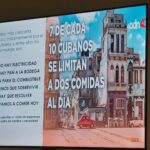
• Venezuela and Cuba: extremely difficult political and social situations, exacerbated by socialist dictatorship, but above all by widespread poverty which has now become systemic. Fr. Sandy explained to us what it means to live out one’s Carmelite vocation amongst a people who are suffering…
Saturday 5 September
The sixth day of the General Definitory featured a presentation by Father Giuseppe Pozzobon (Province of Venice) on the theme of ongoing formation. The first part of his presentation provided a definition of the concept, drawing on the documents of the Magisterium of the Church and of the Order. We can observe that a culture of ongoing formation does not yet exist. Ongoing formation is not merely a matter of keeping up to date, but rather a constantly renewed education in living out one’s vocation. The second part of his presentation highlighted two crucial areas of formation work. The first is that of post-formation, so that the integration of the newly ordained brother into fraternal and pastoral life is supported by the prior and the other brothers, as well as by a spiritual director. The third aspect of the presentation focused on the main challenges in the field of formation: the new evangelisation; the transmission of the charism and, in particular, the experience of prayer; theological and moral renewal; the quality of our fraternal life; the relationship between authority and obedience; and the increasingly international dimension of our provinces.
Father Ramiro Casale began his talk by asking us to reflect on the identity of the OCDS, which is neither an extension of our parishes, nor a group of volunteers working with the friars, nor any kind of spiritual movement. According to the Constitutions, it is a lay vocation that shares in the charism of the Order and lives it out in the heart of the world. That is why our question should be: how can we help this vocation to reach its fullness, in its specific nature, which is to live out the charism in the world? The role of the OCDS assistant is therefore of great importance in helping the laity to become aware of this reality: he is a witness to the charism, offers spiritual guidance and contributes to formation, whilst remaining a link and a source of unity between the religious and lay communities. The Provincial, for his part, plays a central role: the Constitutions state that he is the Superior of the OCDS within his territory and that he is responsible for its spiritual welfare. The future will therefore consist in guiding the Secular Order towards responsible autonomy, which does not mean independence from the Order, but rather an awareness of the vocation received, so that the Teresian Carmel may truly be one great family composed of friars, nuns and lay people: three different ways of living out the same charism, with the same source, the same tradition and the same passion for Christ.
On Saturday afternoon, we were given a presentation on the life of the Province of Saint Albert of Mexico. We were given a brief overview of the history of this province – one of the Order’s oldest – as well as its current vitality, where brothers, sisters and members of the OCDS work together in a spirit of fraternity and creativity. In particular, they described how the Provincial Council coordinates the various areas under its responsibility and outlined the pastoral work which, following past misunderstandings, has now become a source of unity for the whole Province, carried out amongst people of all ages. Thanks to this account, amongst other things, we felt deeply grateful for the warm welcome our Mexican brothers had extended to us.
Sunday 6 September
DAY OF REST
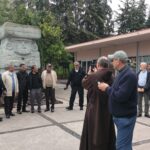
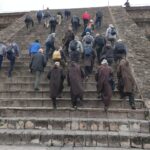
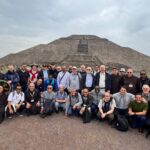
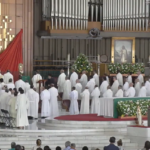
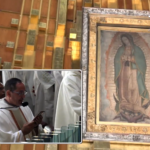
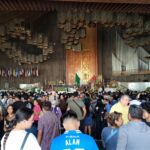
The brothers visited the archaeological site and the pyramids of Teotihuacan. But, above all, in the afternoon, together with the Carmelite family from Mexico, we prayed and celebrated the Eucharist under the gaze of Our Lady of Guadalupe, in her shrine. You were all present in our prayers.
Monday 7 September
Father Marco Chiesa’s presentation reminded us of the role and function of the Postulation General: it is the official body which, on behalf of the Holy See, is primarily responsible for the causes of beatification and canonisation within the Order in its three branches (nuns, friars and seculars), and, secondarily, for all institutes affiliated to the Order that wish to appeal to it. The Postulation is entirely at the service of the Order, in a spirit of mutual support, which also involves the appointment of a local representative for each circumscription. We were also shown how the Postulation deals with the sensitive area of the cult of the saints and the veneration of relics, taking into account the necessary distinctions between venerables, the blessed and the saints, as well as the classification of relics. As regards the Order’s liturgy, however, in the light of the universal liturgy of the Church, the presentation outlined the process of revising our liturgical books, including the work currently underway on the definition of the calendar (2023), the translation of the Proprium missarum (approved in 2025) and the first draft of the Proper of the Liturgy of the Hours.
Father Juan David Noguera, for his part, outlined the role of the Procurator General: to handle the Order’s affairs with the Holy See, under the authority of the Superior General. In order to make it easier to understand this service and how to seek its assistance, a practical guide to the procedures has been drawn up. It is available on the Order’s website.
In the afternoon, Father Pius D’Souza explained to us what a pastoral visit entails. This visit, whilst having a canonical character, is also ‘pastoral’, as it must involve meetings, listening, encouragement and guidance, in order to help the brothers grow in their vocation. The meetings with each brother, followed by those with the community, will serve not only to assess their life of prayer, their fraternal life and their apostolic life, but also to evaluate the financial management and the upkeep of the buildings. The purpose of the pastoral visit is to strengthen fraternal communion, to preserve and promote the charism of the Order, in accordance with our Constitutions and for the fulfilment of our apostolic mission.
Father Angelo Lanfranchi, for his part, emphasised the importance of managing all secretarial activities, whether they concern documents, books or archives. He highlighted the significance of this by quoting Pope Leo XIV during his first meeting with the Roman Curia, shortly after his election (24 May 2025): “Memory is an essential element of a living organism. It is not merely directed towards the past, but nourishes the present and guides us towards the future. Without memory, the path becomes lost; it loses its meaning”.
Tuesday 8 September
On this final day of the Definitory, the first talk, given by Fr Jean-Alexandre (Province of Paris), addressed the anthropological and religious challenges posed by the digital revolution we are currently experiencing, which, like other social realities, is influencing the lives of religious and that of the community itself. This is a major challenge that can lead to the isolation of religious from the rest of the community. It is not a question of rejecting the digital world, social media and other tools, but of integrating them properly into the lives of consecrated women and the community. Following this presentation, Father José Pereira, Secretary for Information, introduced the Order’s website, where all the documents prepared by the General House can be found.
After the coffee break, Fr Agustí Borrell, Vicar General, submitted the question of participation in the forthcoming Chapter General to the assembly. The major superiors discussed the proposal openly.
During the afternoon, we also heard testimonies from several brothers:
- Colombia: last August, a violent earthquake severely damaged some of our houses;
- Congo, Burkina Faso and Nigeria: in recent years, violence has increased considerably;
- India: the reality of the persecution suffered by Christians is difficult, especially in the north.
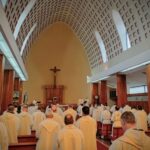
The Extraordinary Definitory concluded with a Eucharistic celebration presided over by the Father General.